Introduction
A school nurse I know once told me, half-joking, what got her through flu season without losing her mind. No supplement, no app, no fourteen-step morning routine. Just soap and water, and getting kids to actually use them.
She said the classrooms where handwashing was routine just had fewer empty seats by February. That was pretty much the whole conversation, and honestly it stuck with me longer than it probably should have.
That’s the real subject of this piece. Not some poster from a pediatrician’s waiting room, but the actual, boring mechanics of why hygiene keeps showing up in the research at all. Fewer sick days. Not dreading the dentist because you flossed more than twice this year.
So here’s what actually protects you, what your mood has to do with any of it, and which habits are worth keeping even on the weeks when everything else falls apart.
What Is Personal Hygiene and Why Does It Matter?
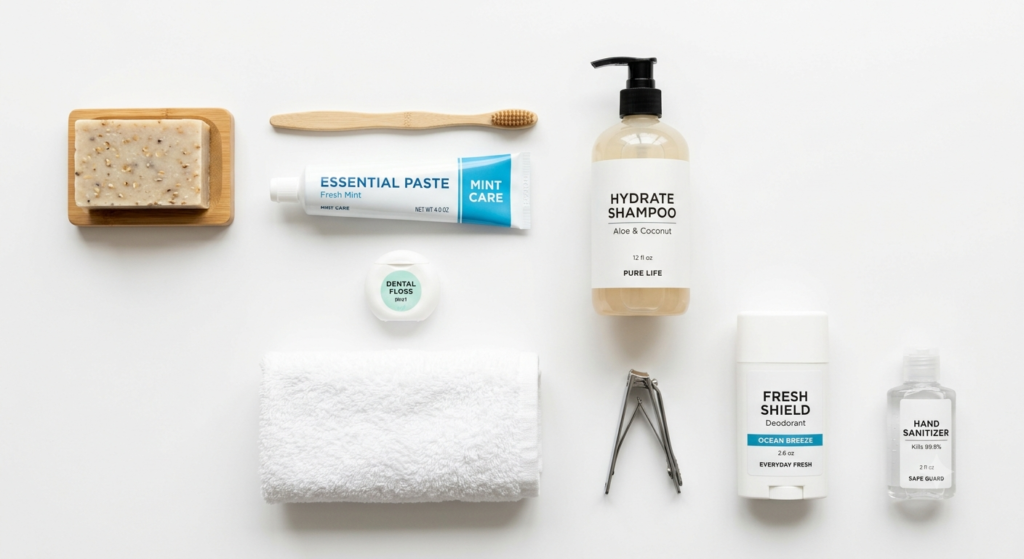
Personal hygiene is mostly stuff you learned before you could tie your own shoes, and now do half-asleep without thinking twice. Washing your hands. Showering. Brushing. Trimming nails before they catch on a sweater.
A few things sneak onto the list that people don’t expect, like rinsing produce before you eat. It nobody really files that under “hygiene” mentally, but it belongs there just as much as anything else on the list.
Each habit blocks off a different route germs use to get in: your hands, your gums, that scrape on your knee you keep telling yourself. You’ll clean properly and never quite do. So when you see a parent at a sink counting to twenty with a five-year-old, that’s not some overcautious parenting trend.
It’s the same instinct a surgeon follows scrubbing in before an operation, just scaled way down. Hygiene isn’t a bonus round that comes after your health is already sorted out. It’s closer to the floor everything else rests on, whether you ever stop to notice it or not.
How Good Hygiene Protects Your Physical Health
Here’s a number worth sitting with for a second: the CDC estimates regular handwashing prevents around 30% of diarrhea-related illness. And roughly 20% of respiratory infections colds, mostly.
Community handwashing programs have cut diarrheal illness anywhere from 23% to 40%. And nearly 58% among people with weaker immune systems. Not exactly a marginal improvement. That’s a real pile of sick days that just never happened to a lot of people.
Oral hygiene is seldom recognized as well. The CDC is down to the nitty-gritty of it: Gum disease is largely preventable if you brush, floss and get regular checkups. When it’s left too long, you could risk more than your teeth! Many office workers extrapolate this from not reading a CDC page.
As cold season approaches, be extra diligent about cleanliness and then you won’t need to be the one calling in sick every other Tuesday!
The Connection Between Personal Hygiene and Mental Well-Being
Physical health is easy enough to prove with numbers. Mental health is messier, harder to pin down to one clean statistic, though no less real for whoever’s actually living through it.
It’s really not a line, but a loop, and after a minute, you get it.
When you don’t take care of yourself you are not as accepted in society and end up feeling lonely and/or anxious. It tastes great, smells great and it still has those bacteria you don’t want to think about too much.
Deal with depression and hygiene starts feeling genuinely impossible, which just deepens the isolation right back to where it started. Neither direction is a character flaw, for what it’s worth. It’s a loop doing exactly what loops do.
There’s a confidence angle here too, and most people already know it without needing a study to spell it out. Feeling clean changes how you carry yourself into an interview, a first date, a conversation you’ve been dreading for a week straight.
Research on teenagers ties acne specifically to lower self-esteem, part of why skincare suddenly becomes such a big deal around fourteen. None of this replaces actual mental health care, obviously. It’s one thread in the fabric, not the whole thing.
Everyday Hygiene Habits That Have the Biggest Impact
Forget whatever ten-step ritual you saw on someone’s skincare page last week. A handful of habits, kept up consistently, cover most of what actually matters here:
- Wash your hands with soap and water for at least 20 seconds before eating, after the bathroom, after anything that felt off.
- Shower regularly, at whatever frequency actually fits your activity level and climate, not some fixed rule.
- Brush twice a day for two full minutes, and floss once.
- Trim your nails so bacteria doesn’t have anywhere to hide.
- Wear clean clothes, especially anything sitting right against skin.
- Handle food safely rinse produce, cook meat all the way through.
Healthcare workers lean on the first one harder than anything else here, and once you know why, it stops sounding like an overreaction. Handwashing interrupts more transmission routes than nearly anything else you could do with twenty seconds and a sink.
Common Personal Hygiene Mistakes and How to Avoid Them
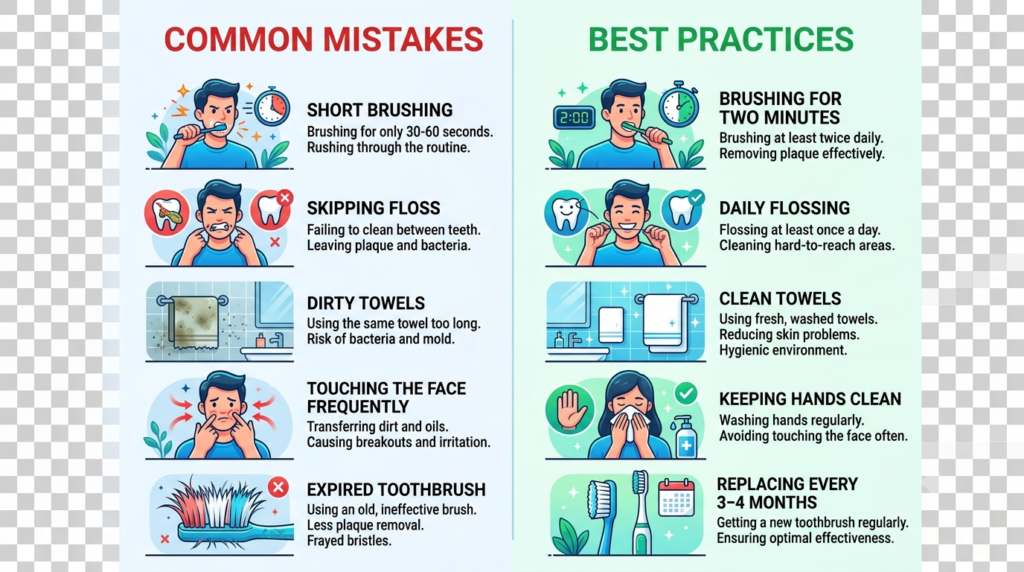
Brushing too fast is the biggest slip by far. Most people brush for well under the recommended two minutes, leaving plaque sitting right along the gumline, which happens to be exactly where it does the most damage.
Skipping floss is a close second no toothbrush, however fancy or expensive, reaches between teeth the way floss does. Reusing the same towel for weeks is another one nobody really thinks about until someone points it out.
The other danger of over washing is to cause dry, cracked, irritated skin. There’s a lot of folks who just rinse with water and never use any soap, and that does not do that much to wash off the oily layer that will keep away germs that may have been residing on the skin.
Hygiene Needs at Different Stages of Life
Kids need supervision and someone worth copying. This is why habits acquired in childhood stay with us our entire lives: because we should make them a more visible and frequent activity than a “shout from another room” when it comes to hand washing.
Hormonal changes can cause a dramatic increase in oil and sweat glands at any time for teenagers. That’s why, about this point, skincare and deodorant become considerations.
In general, adults are already running late for their schedules and have to deal with hygiene which is already tough enough. A habit that builds on another automatic habit will stay better, e.g., after a week of chaos a flossing habit will stick around better than a stand alone habit that no one actually checks off after a week of chaos.
Elderly individuals may have limited mobility and/or thin skin. A family visit (compared to leaving it for the individual to figure out) can help.
How Personal Hygiene Helps Prevent Common Diseases
COVID-19 put a spotlight on something infectious disease researchers already knew cold, long before most of us were paying much attention.
The CDC still lists handwashing and covering coughs among the core defenses against respiratory illness. A recommends hand sanitizer with at least 60% alcohol as a backup when soap isn’t around.
Research reviews put handwashing with soap at cutting diarrheal disease transmission by roughly 30% to 48%. A respiratory disease by about 21%, with a documented role in slowing outbreaks like cholera and Ebola.
Skin hygiene lowers your odds of picking up fungal or bacterial infections in shared spaces gyms, locker rooms. You know the ones. Oral hygiene cuts risk for cavities and gum disease. None of it’s bulletproof on its own. Stack these habits together, though, and you noticeably lower how often you, and everyone around you, get sick.
Practical Tips for Building a Better Hygiene Routine
Expert Tip: Attach a new habit to one you already do on autopilot. Flossing right after brushing tends to stick far better than treating it as some separate task you’re supposed to remember hours later, once you’re half asleep already.
Did You Know? A meta-analysis of hand hygiene studies found a single handwashing event corresponds to roughly a 3% drop in the daily odds of catching a respiratory infection. Small on its own, sure, but it stacks up fast across the dozens of times a day people touch their faces without ever noticing they’re doing it.
Quick Checklist:
- Wash hands before meals and after the bathroom
- Brush two minutes, twice daily
- Floss once a day
- Shower based on activity, not a fixed rule
- Wear clean clothes, especially undergarments
- Trim nails weekly
- Swap toothbrush every three to four months
Pick two or three of these to start with. Try to overhaul the whole list in one week and it usually falls apart by day four most people who’ve tried it have watched it collapse the exact same way.
Frequently Asked Questions
For good personal hygiene how many times should you shower?
Well, the magic is 0, at least as far as I am concerned! For most sweat and skin sensitive persons, daily or every other day will suffice.
Is unhygienic condition a cause of anxiety or depression?
There’s a certain entanglement between the two, but not directly. Hygiene can be neglected and worsen isolation, while already being stressed by anxiety or depression, can make hygiene challenging.
What is the most important hygiene practice?
By all accounts, handwashing. It will break more chains of transmission than nearly any other action you can take in 20 seconds.
Is hand sanitizer a good substitute for handwashing?
They’re good when soap is not available, at 60% alcohol or above, but they won’t remove dirt and grease like soap does.
Should children have a different kind of hygiene regimen?
Primarily, it is in terms of supervision. Children need to see the behaviour, don’t just hear about it from across the room.
Conclusion
Strip away the jargon and it comes down to something pretty simple: small habits, kept up consistently, protect your health and shape how you move through your day.
The CDC and WHO research backs the physical side clearly enough fewer infections, lower gum disease risk, less time sick overall. The mental health piece is harder to measure exactly, but for a lot of people it’s just as real, maybe more so. None of this needs a complicated routine to actually feel it.
Pick two or three habits from here, attach them to something you already do without thinking, and let consistency handle the rest.
Leave a Reply