Category: Health

  • What Is Obsession? Causes, Symptoms, and Healthy Ways to Cope

    Introduction

    A few years back I couldn’t stop thinking about an email I’d sent. Not a bad one, really. I’d written “regards” instead of “best.” And for some reason my brain decided this was a five-alarm crisis. I checked my sent folder maybe fifteen times that day.

    Reread it, cringed, closed the laptop, opened it again ten minutes later. My partner asked what was wrong and I said “nothing,” which was a lie. Because clearly something was very wrong with how much space one word was taking up in my head.

    That’s obsession. Not the dramatic movie version nobody’s stalking anyone, no one’s building a shrine. Just your brain, latching onto something small and refusing, flatly refusing, to let it go.

    We throw the word around casually. “I’m obsessed with this show.” “My uncle’s obsessed with his lawn.” Usually that’s fine, even kind of charming enthusiasm wearing a bigger word than it needs.

    What actually counts as obsession

    My rough definition, after living with this stuff and reading way too much about it: obsession is a thought, image, or urge that keeps coming back, usually against your will. Passion pulls you toward something you’re choosing it. Obsession traps you inside it.

    There’s no choosing involved. You’re just stuck, running the same lap, over and over, wondering when the track’s going to end. There are two rough categories here. Everyday obsessive thinking worrying a decision into the ground.

    Replaying an awkward conversation on loop, fixating on a goal until it swallows the rest of your thoughts. Uncomfortable, sure, but it tends to fade. Sleep helps, so does time.

    If you’ve ever lain awake wondering whether your racing thoughts are “just stress” or something bigger. Here’s roughly where professionals draw the line: is it actually interfering with your life, and is it paired with compulsions? That’s usually the marker.

    Where this comes from

    There’s rarely one clean cause. It’s more like a few things stacking on top of each other.

    Brain chemistry’s involved research ties obsessive thinking and OCD to how the brain manages serotonin, and to circuits involved in decisions and habits. Basically, the “okay, done, you can relax” signal misfires. So nothing ever fully resolves.

    Which is exhausting in a way that’s genuinely hard to describe to someone who hasn’t felt it. Anxiety usually fuels it from underneath. The two feed each other more anxious, more searching for something to fix or pin down.

    Fixating can feel like control. It isn’t, not really, but it feels like it in the moment, and that’s often enough to keep the loop going.

    What Causes Obsessive Thoughts and Behaviors?
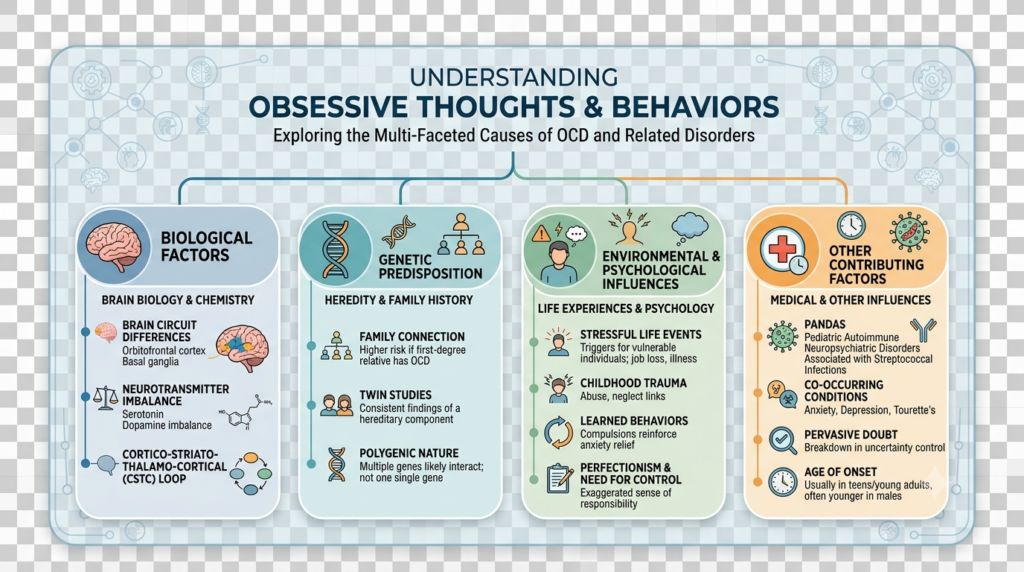
    Personality and upbringing play a part too. Lean toward perfectionism, or grow up somewhere mistakes felt genuinely dangerous. Rather than just embarrassing, and obsessive patterns show up more later.

    Punish uncertainty enough as a kid, and certainty becomes the thing you chase forever as an adult even though. Let’s be honest, certainty is mostly a myth we tell ourselves. Stress and life changes matter too.

    A new job, a scary appointment these rattle your sense of safety. Sometimes the mind grabs onto a thought it can “control” as a kind of anchor. Even when that anchor is the thing hurting you.

    What it feels like from inside it

    Mentally: intrusive thoughts that show up uninvited, sitting there in the middle of an otherwise ordinary Tuesday. Rumination replaying the same scene hoping it lands differently this time. It won’t. It never does, and some part of you knows that, and you try anyway.

    Trouble focusing on anything else. A nagging itch that something’s unfinished, even when you can’t say what. Physically: shoulders creeping up toward your ears, a jaw that’s aching by dinner and you don’t even remember clenching it.

    Trouble sleeping because the brain won’t power down. A restlessness with nowhere to go like sitting still takes more effort than it should. Some people notice their heart rate ticking up just from the thought alone, body bracing for a threat that isn’t actually in the room.

    Common Signs and Symptoms of Obsessive Thoughts
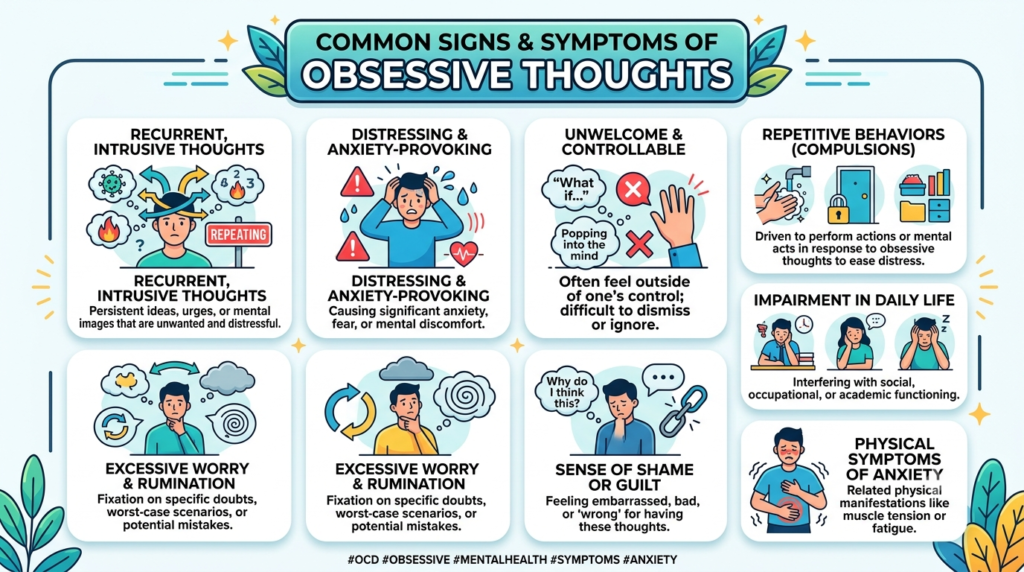
    Behaviorally, it’s usually checking. Rereading a text five times before hitting send. Walking back to check the door third time now. Googling a symptom at 1 a.m., closing the tab out of embarrassment, opening it again four minutes later.

    These give relief, briefly, and the window shrinks each time, until the thought’s back before you’ve even set the phone down. A friend once described her version of this obsessing over a work mistake as “a browser tab open in my head I couldn’t close.”

    I’ve thought about that line more times than I’d like to admit. Quiet background noise, draining the battery the whole time, while you try to focus on literally anything else.

    How you actually cope with it

    Here’s the part people don’t want to hear: you can’t usually think your way out of obsession by trying harder not to think about it. That backfires almost every time. Try not thinking about a pink elephant for ten seconds. Go on, See what happens.

    What tends to help is changing your relationship to the thought, rather than fighting the thought head-on. Name it instead of wrestling it. Even something small “ah, there’s the loop again” creates a little gap between you and the thought. That gap is where you get some control back.

    Try a worry window, Ten minutes a day where the thought’s allowed to be as loud as it wants. Write it down, sit with it, no holding back.

    Healthy Ways to Cope with Obsessive Thoughts

    Move your body if you can. Obsession lives mostly in the head, and a walk, a stretch, even just doing dishes, tends to loosen its grip more than you’d expect going in.

    If you’re a checker, delay the check. Five minutes first. You’re teaching your nervous system, slowly. That the anxious feeling fades on its own it just takes longer than the ritual promises.

    Talk to someone, if it’s gotten that far. Sometimes this is manageable solo. Sometimes it isn’t, and that’s not failure, just information.

    If obsessive thoughts are messing with work, relationships, or sleep for weeks running. A therapist trained in CBT or ERP (Exposure and Response Prevention) helps in ways white-knuckling alone usually can’t. Easy to say, harder to believe at 2 a.m. I know.

    The thought isn’t actually the enemy

    Obsessive thoughts, by themselves, aren’t dangerous. What hurts is the fight against them the constant shoving away. Which somehow makes them come back louder. The goal was never a silent mind, Nobody has that.

    The real goal is a thought showing up, getting its moment, and moving on through, without hijacking the whole day. So if it’s 2 a.m, and you’re replaying something that doesn’t deserve this much of your night you’re not broken.

    Not alone in it either, even if it feels that way in that particular kind of quiet. Just a very human pattern, one that gets quieter over time, with a little patience toward yourself. That last part’s actually true, even at 2 a.m., even when it doesn’t feel like it.

    Real Life Examples

    How ERP Helped Reduce Obsessive Checking

    One of the most famous examples involved Exposure and Response Prevention (ERP), a kind of cognitive behavioral therapy for an OCD treatment. A young adult with a history of checking locks, appliances and work emails reported that he practiced rituals for several hours every day in a published case report.

    Research Insight


    According to a large clinical review published by the American Psychiatric Association, OCD is a condition that affects around 2–3% of people in their lifetime.

    CBT, especially ERP, is consistently found to be the first-line psychological treatment. If required, some antidepressant drugs (SSRIs) can also help to further reduce symptoms. While intrusive thoughts may not completely go away, many people do see a marked improvement with proper treatment.

    Frequently Asked Questions (FAQs)

    What is the difference between obsession and passion?

    Passion is an activity that you do because you like it or have a reason for doing it. Obsession is involuntary and disturbing. It doesn’t motivate you, it makes you feel anxious and unable to concentrate on anything else.

    Have obsessive thoughts?

    Yes. At some point in our lives, we all have unwanted intrusive thoughts. They are a problem when they are frequent, distressing, difficult to control, and start to interfere with work, relationships, sleep, or daily activities.

    Do I have OCD if I have obsessive thoughts?

    Not necessarily. Obsessive thoughts do not necessarily indicate OCD. OCD typically is diagnosed when the intrusive thoughts are accompanied by compulsive behaviors or mental rituals.

    Do obsessive thoughts get worse when stressed?

    Absolutely, anxiety can be heightened by stress, significant life changes, illness and uncertainty, which can make obsessive thoughts more frequent and intense. People often find that their symptoms get better when they decrease the stress.

    What is the best treatment for obsessive thoughts?

    Treatment will vary depending on the cause, but there is good scientific evidence that Exposure and Response Prevention (ERP)

    Conclusion

    Obsession isn’t simply caring too much about something. It’s the sense that you’re in a vicious cycle. You can’t get out of, even though you know that the thought isn’t helpful. For others, it’s reliving experiences.

    The positive thing is that obsessive thoughts don’t have to consume your life. The cycle can be broken over time by learning to identify it, reducing compulsive behaviors, stress management, and professional assistance as needed.

    Typically, it’s not a big change, it’s a small change, such as not doing that one thing you were tempted to do. Not reacting to that one uncomfortable thought.
  • Why Personal Hygiene Matters for Your Physical and Mental Health

    Why Personal Hygiene Matters for Your Physical and Mental Health


    Introduction

    A school nurse I know once told me, half-joking, what got her through flu season without losing her mind. No supplement, no app, no fourteen-step morning routine. Just soap and water, and getting kids to actually use them.

    She said the classrooms where handwashing was routine just had fewer empty seats by February. That was pretty much the whole conversation, and honestly it stuck with me longer than it probably should have.

    That’s the real subject of this piece. Not some poster from a pediatrician’s waiting room, but the actual, boring mechanics of why hygiene keeps showing up in the research at all. Fewer sick days. Not dreading the dentist because you flossed more than twice this year.

    So here’s what actually protects you, what your mood has to do with any of it, and which habits are worth keeping even on the weeks when everything else falls apart.

    What Is Personal Hygiene and Why Does It Matter?

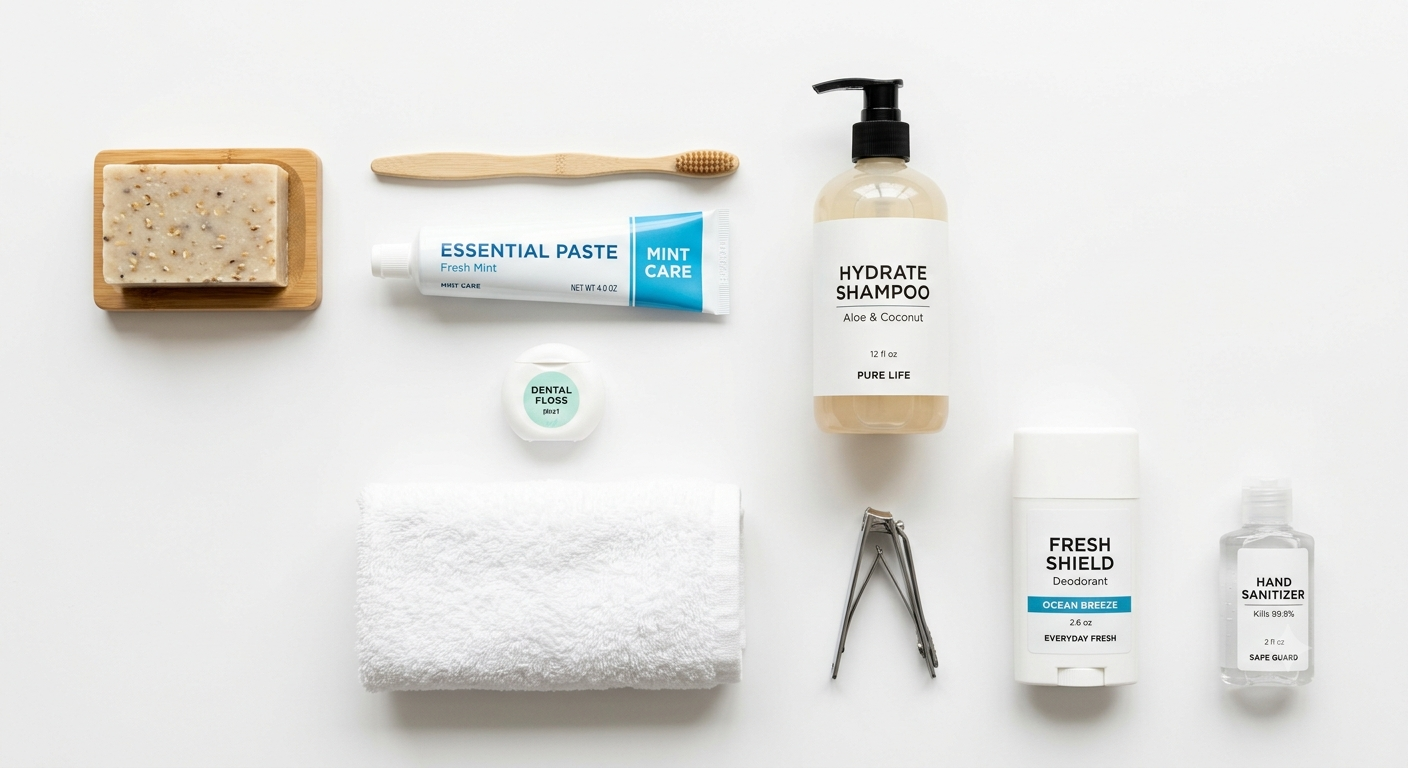
    Personal hygiene is mostly stuff you learned before you could tie your own shoes, and now do half-asleep without thinking twice. Washing your hands. Showering. Brushing. Trimming nails before they catch on a sweater.

    A few things sneak onto the list that people don’t expect, like rinsing produce before you eat. It nobody really files that under “hygiene” mentally, but it belongs there just as much as anything else on the list.

    Each habit blocks off a different route germs use to get in: your hands, your gums, that scrape on your knee you keep telling yourself. You’ll clean properly and never quite do. So when you see a parent at a sink counting to twenty with a five-year-old, that’s not some overcautious parenting trend.

    It’s the same instinct a surgeon follows scrubbing in before an operation, just scaled way down. Hygiene isn’t a bonus round that comes after your health is already sorted out. It’s closer to the floor everything else rests on, whether you ever stop to notice it or not.

    How Good Hygiene Protects Your Physical Health

    Here’s a number worth sitting with for a second: the CDC estimates regular handwashing prevents around 30% of diarrhea-related illness. And roughly 20% of respiratory infections colds, mostly.

    Community handwashing programs have cut diarrheal illness anywhere from 23% to 40%. And nearly 58% among people with weaker immune systems. Not exactly a marginal improvement. That’s a real pile of sick days that just never happened to a lot of people.

    Oral hygiene is seldom recognized as well. The CDC is down to the nitty-gritty of it: Gum disease is largely preventable if you brush, floss and get regular checkups. When it’s left too long, you could risk more than your teeth! Many office workers extrapolate this from not reading a CDC page.

    As cold season approaches, be extra diligent about cleanliness and then you won’t need to be the one calling in sick every other Tuesday!

    The Connection Between Personal Hygiene and Mental Well-Being

    Physical health is easy enough to prove with numbers. Mental health is messier, harder to pin down to one clean statistic, though no less real for whoever’s actually living through it.
    It’s really not a line, but a loop, and after a minute, you get it.

    When you don’t take care of yourself you are not as accepted in society and end up feeling lonely and/or anxious. It tastes great, smells great and it still has those bacteria you don’t want to think about too much.

    Deal with depression and hygiene starts feeling genuinely impossible, which just deepens the isolation right back to where it started. Neither direction is a character flaw, for what it’s worth. It’s a loop doing exactly what loops do.

    There’s a confidence angle here too, and most people already know it without needing a study to spell it out. Feeling clean changes how you carry yourself into an interview, a first date, a conversation you’ve been dreading for a week straight.

    Research on teenagers ties acne specifically to lower self-esteem, part of why skincare suddenly becomes such a big deal around fourteen. None of this replaces actual mental health care, obviously. It’s one thread in the fabric, not the whole thing.

    Everyday Hygiene Habits That Have the Biggest Impact

    Forget whatever ten-step ritual you saw on someone’s skincare page last week. A handful of habits, kept up consistently, cover most of what actually matters here:

    • Wash your hands with soap and water for at least 20 seconds before eating, after the bathroom, after anything that felt off.
    • Shower regularly, at whatever frequency actually fits your activity level and climate, not some fixed rule.
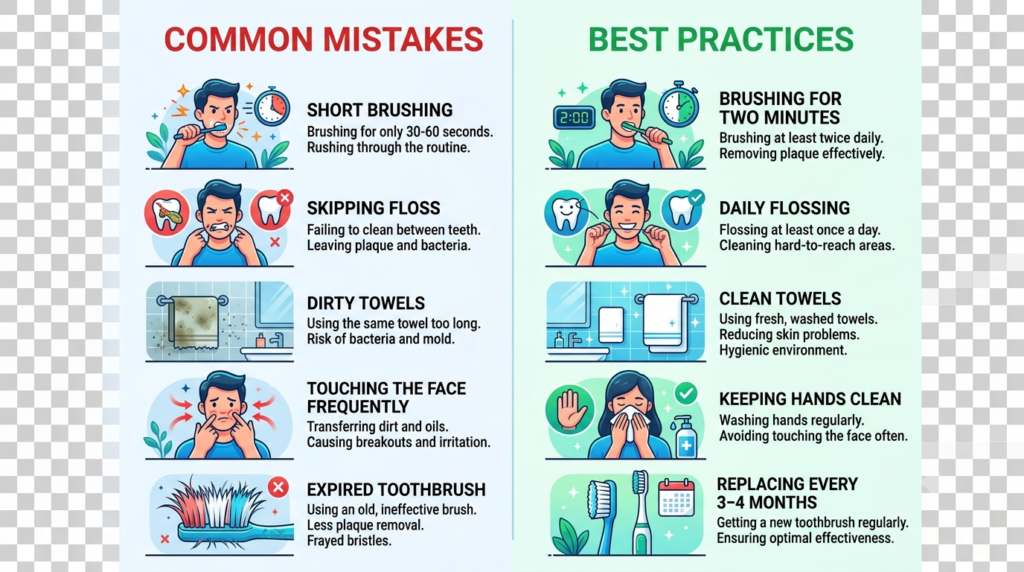
    • Brush twice a day for two full minutes, and floss once.
    • Trim your nails so bacteria doesn’t have anywhere to hide.
    • Wear clean clothes, especially anything sitting right against skin.
    • Handle food safely rinse produce, cook meat all the way through.

    Healthcare workers lean on the first one harder than anything else here, and once you know why, it stops sounding like an overreaction. Handwashing interrupts more transmission routes than nearly anything else you could do with twenty seconds and a sink.

    Common Personal Hygiene Mistakes and How to Avoid Them

    Brushing too fast is the biggest slip by far. Most people brush for well under the recommended two minutes, leaving plaque sitting right along the gumline, which happens to be exactly where it does the most damage.

    Skipping floss is a close second no toothbrush, however fancy or expensive, reaches between teeth the way floss does. Reusing the same towel for weeks is another one nobody really thinks about until someone points it out.

    The other danger of over washing is to cause dry, cracked, irritated skin. There’s a lot of folks who just rinse with water and never use any soap, and that does not do that much to wash off the oily layer that will keep away germs that may have been residing on the skin.

    Hygiene Needs at Different Stages of Life

    Kids need supervision and someone worth copying. This is why habits acquired in childhood stay with us our entire lives: because we should make them a more visible and frequent activity than a “shout from another room” when it comes to hand washing.

    Hormonal changes can cause a dramatic increase in oil and sweat glands at any time for teenagers. That’s why, about this point, skincare and deodorant become considerations.

    In general, adults are already running late for their schedules and have to deal with hygiene which is already tough enough. A habit that builds on another automatic habit will stay better, e.g., after a week of chaos a flossing habit will stick around better than a stand alone habit that no one actually checks off after a week of chaos.

    Elderly individuals may have limited mobility and/or thin skin. A family visit (compared to leaving it for the individual to figure out) can help.

    How Personal Hygiene Helps Prevent Common Diseases

    COVID-19 put a spotlight on something infectious disease researchers already knew cold, long before most of us were paying much attention.

    The CDC still lists handwashing and covering coughs among the core defenses against respiratory illness. A recommends hand sanitizer with at least 60% alcohol as a backup when soap isn’t around.

    Research reviews put handwashing with soap at cutting diarrheal disease transmission by roughly 30% to 48%. A respiratory disease by about 21%, with a documented role in slowing outbreaks like cholera and Ebola.

    Skin hygiene lowers your odds of picking up fungal or bacterial infections in shared spaces gyms, locker rooms. You know the ones. Oral hygiene cuts risk for cavities and gum disease. None of it’s bulletproof on its own. Stack these habits together, though, and you noticeably lower how often you, and everyone around you, get sick.

    Practical Tips for Building a Better Hygiene Routine

    Expert Tip: Attach a new habit to one you already do on autopilot. Flossing right after brushing tends to stick far better than treating it as some separate task you’re supposed to remember hours later, once you’re half asleep already.

    Did You Know? A meta-analysis of hand hygiene studies found a single handwashing event corresponds to roughly a 3% drop in the daily odds of catching a respiratory infection. Small on its own, sure, but it stacks up fast across the dozens of times a day people touch their faces without ever noticing they’re doing it.

    Quick Checklist:

    • Wash hands before meals and after the bathroom
    • Brush two minutes, twice daily
    • Floss once a day
    • Shower based on activity, not a fixed rule
    • Wear clean clothes, especially undergarments
    • Trim nails weekly
    • Swap toothbrush every three to four months

    Pick two or three of these to start with. Try to overhaul the whole list in one week and it usually falls apart by day four most people who’ve tried it have watched it collapse the exact same way.

    Frequently Asked Questions

    For good personal hygiene how many times should you shower?

    Well, the magic is 0, at least as far as I am concerned! For most sweat and skin sensitive persons, daily or every other day will suffice.

    Is unhygienic condition a cause of anxiety or depression?


    There’s a certain entanglement between the two, but not directly. Hygiene can be neglected and worsen isolation, while already being stressed by anxiety or depression, can make hygiene challenging.

    What is the most important hygiene practice?

    By all accounts, handwashing. It will break more chains of transmission than nearly any other action you can take in 20 seconds.

    Is hand sanitizer a good substitute for handwashing?

    They’re good when soap is not available, at 60% alcohol or above, but they won’t remove dirt and grease like soap does.

    Should children have a different kind of hygiene regimen?

    Primarily, it is in terms of supervision. Children need to see the behaviour, don’t just hear about it from across the room.

    Conclusion

    Strip away the jargon and it comes down to something pretty simple: small habits, kept up consistently, protect your health and shape how you move through your day.

    The CDC and WHO research backs the physical side clearly enough fewer infections, lower gum disease risk, less time sick overall. The mental health piece is harder to measure exactly, but for a lot of people it’s just as real, maybe more so. None of this needs a complicated routine to actually feel it.

    Pick two or three habits from here, attach them to something you already do without thinking, and let consistency handle the rest.


  • Gut Health and Nutrition: Foods That Support Digestion

    Gut Health and Nutrition: Foods That Support Digestion


    Introduction

    For years I thought bloating was just part of eating lunch. Almost every day, just like clockwork. I never thought about it, you just got used to it, right? Now I can only see that, it was my gut telling me something then that I wasn’t listening to.

    I actually read information about gut health, rather than reaching for the antacid by habit. Most of that daily discomfort went away. Slowly, though. Not some miracle overnight fix; it took weeks before I even noticed the difference.

    So let’s get into it properly what gut health actually means, why it reaches way past digestion. Which foods hold up under real research instead of whatever’s trending on wellness TikTok this particular week.

    What Is Gut Health, Really?

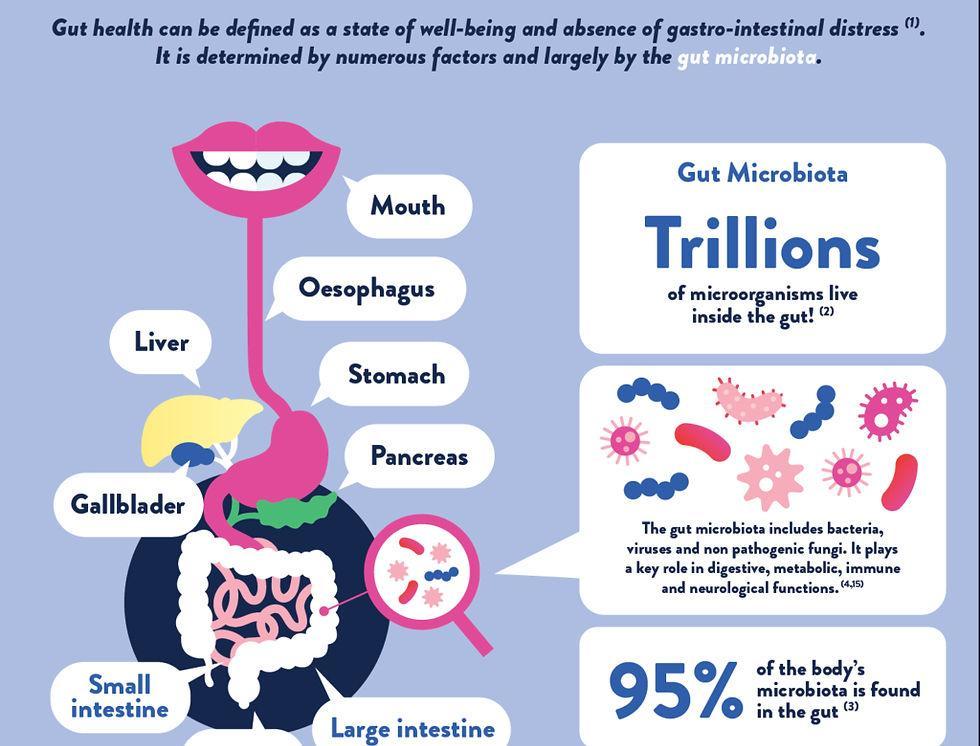
    Your gut isn’t just a tube food passes through on its way out the other end. It’s home to trillions of bacteria, fungi, and other microbes all lumped together under one umbrella term, the gut microbiome.

    Scientists put the number somewhere between 500 and 1,000 bacterial species living in there at any given moment. Genuinely more than most people would guess if you stopped them on the street and asked.

    Here’s the number that actually made me pause mid-scroll while I was researching this piece. The microbiome carries roughly 3.3 million unique genes.

    Why Your Gut Microbiome Matters

    The entire human genome, by comparison? About 21,000. That gap is enormous almost uncomfortable when you actually sit with it for a second. Your gut bacteria are quietly doing chemical work your own cells simply can’t pull off. Full stop, no asterisk.

    Good gut health, in plain terms, just means a diverse, reasonably balanced mix of these microbes. Plenty of the helpful species, not too many troublemakers crowding them out.

    Dysbiosis: When Your Gut Falls Out of Balance

    When that balance tips the wrong way and it does, more often than people realize it’s called dysbiosis. It’s been tied to bloating, inflammation, and a weaker immune response. A lot to pin on bacteria you will genuinely never see.

    Why Gut Health Affects More Than Digestion

    This is the part that surprised me most while digging through the research. Most people underestimate what’s actually happening down there, myself included until fairly recently.

    The Gut-Brain Connection

    Gut bacteria produce neurotransmitters, including serotonin and GABA. Yes the same chemicals tangled up in mood regulation. Researchers call this the gut-brain axis, and it keeps getting mapped in finer detail every year, not less.

    Immune System Support

    A big chunk of your immune system actually lives in your gut lining, which most people never think about until something goes wrong. A healthy microbiome helps keep that lining intact, and that matters, because a damaged lining sometimes nicknamed “leaky gut”.

    It can let bacteria and food particles slip into your bloodstream. That tends to trigger inflammation nobody signed up for and nobody wants.

    Metabolic Health

    Fiber feeds the good bacteria in your gut, which produces short-chain fatty acids (SCFAs). That play a role in blood sugar levels, maintaining weight, and even cholesterol levels.

    In a 2025 study published in the journal Nature, over 34,000 individuals were followed and a ranking list of microbiome species. That is most associated with improved metabolic markers was created. Thirty-four thousand. Not some little pilot that’s in a book that nobody reads..

    Foods That Support Digestion (What Research Backs)

    Alright here’s the part you actually came for. Not every “gut-healthy” food an influencer swears by holds up once you look closer. But a fair number of the basics genuinely do, and they’re less exciting than a supplement drop, admittedly.

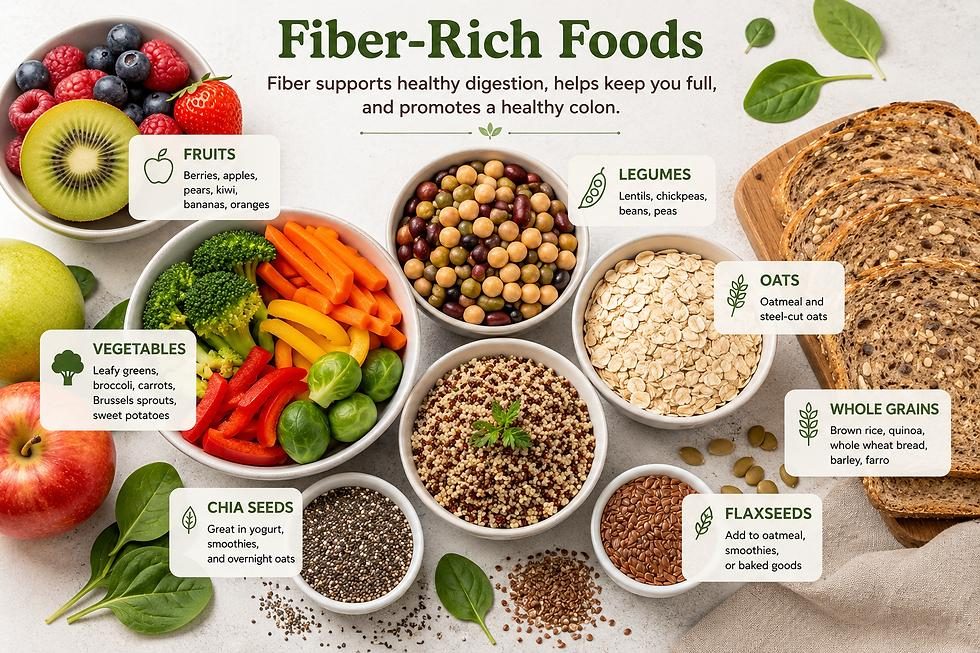
    That last row isn’t some throwaway wellness tip I added for padding. The recommended amount of fiber is 20-40 grams/day for most Americans, but varies by sex and age.

    In 2026, NPR spoke with microbiome scientists, who referred to fiber as “the one most powerful, simplest lever you can have on gut health. Variety matters here almost as much as quantity does. Maybe more, honestly, based on how the numbers broke down.

    Fiber Deserves Its Own Paragraph

    Microbiome researchers interviewed by NPR in 2026 called fiber the single most powerful, simplest lever for gut health you have available. Simplest, not easiest there’s a real difference, and I learned it the hard way, mid-bloat, seriously questioning my recent life choices.

    Ramp fiber up too fast and you’ll trigger bloating, which is more than a little ironic given the whole point of doing this. Slow and steady genuinely beats an ambitious overnight overhaul. Every single time, in my experience and apparently in the research too.

    Fermented Foods, in Practice

    Stanford researchers discovered that six servings of fermented foods each day over 17 days significantly reduced 19 different inflammatory markers. And boosted microbes in a randomized trial. Nineteen.

    Within a span of 2+ weeks. That’s a tangible change relatively speaking after a relatively short period of time.

    Foods That Can Work Against Your Gut

    Gut health isn’t only about what you add in. What you cut back matters too, and that part gets skipped constantly in wellness content that’s mostly trying to sell you something in the same paragraph.

    • Ultra-processed foods linked to reduced microbial diversity and fewer beneficial bacteria across several population studies
    • Emulsifiers, common in plant milks and protein shakes shown in lab studies to potentially weaken the gut’s protective mucus lining
    • Certain preservatives, like sodium benzoat may inhibit growth of some beneficial bacteria
    • Very low-fiber diets tied to lower SCFA production and reduced microbial resilience over time

    None of that means swearing off processed food entirely starting this afternoon, dramatically, forever. It just means balance beats treating any one food like the villain of the whole story.

    A Simple Weekly Gut Health Checklist

    Small, repeatable habits beat dramatic short-term resets almost every single time I’ve tried it either way. Here’s a realistic starting point, nothing extreme:

    • Eat at least one fermented food daily yogurt, kefir, kimchi, whatever you’ll actually eat and not just buy once and forget in the fridge
    • Aim for wider plant variety weekly, not just more of the same three vegetables you’ve been rotating since roughly college
    • Add fiber gradually, not all in one ambitious, regrettable Monday morning
    • Include a prebiotic vegetable garlic, onion, leeks most days, doesn’t need to be fancy
    • Cut back on ultra-processed snacks where that’s realistic, not where it feels like punishment
    • Prioritize sleep, since poor sleep has been shown to shift gut bacteria composition too which genuinely surprised me the first time I read it

    Real-Life Examples

    The Stanford fermented food trial

    Stanford researchers ran a controlled study where one group increased fiber intake and another added fermented foods, tracked over roughly ten weeks. The fermented-food group saw increased microbial diversity plus a real drop in inflammatory markers.

    FAQs

    Which foods would you recommend for a healthy gut?

    There is good evidence for the benefits of fiber-rich plants, fermented foods such as yogurt and kefir, as well as prebiotic vegetables like garlic and onions on microbial diversity and digestion.

    How many days does it take to enhance the health of the gut?

    Not necessarily. Whole fermented foods contain live bacteria naturally, while numerous supplements have not yet been shown to have a definite positive effect compared to foods, according to researchers.

    Does gut health have an impact on mental health and mental well-being?

    Yes, meaningfully so. The gut-brain axis is an active and continuous field of study and the gut produces Neurotransmitters such as serotonin and GABA which are known to affect our mood, anxiety and stress.

    Can gut health affect mood and mental health?

    Yes, meaningfully so. Gut bacteria produce neurotransmitters like serotonin and GABA, and the gut-brain axis remains an active, ongoing area of research into anxiety, mood, and stress.

    But is bloating always a sign of poor gut health?

    Not always. Bloating every now and then is quite common, particularly following a meal that contains a lot of fibre. If this is happening often or intensely, it is best to mention to a doctor as this can indicate other issues such as IBS.

    What foods should I limit for better gut health?

    Ultra-processed foods, certain emulsifiers, and very low-fiber diets are all linked to reduced microbial diversity in current research.

    Conclusion: The Actionable Takeaway

    Gut health isn’t a trend that needs supplements or some rigid protocol to chase down. The research keeps circling back to the same handful of basics more plant variety, regular fermented foods, gradual fiber increases, fewer ultra-processed meals.

    Start small. Smaller than feels necessary, even. Add one fermented food this week. Try a vegetable you’ve walked past in the grocery store a dozen times but never actually bought.

    Your gut responds faster than you’d think and so, usually, does the way you feel by the end of the week, in ways you might not even connect back to what you ate.

    This article is for general educational purposes and isn’t a substitute for personalized medical advice. If you’re dealing with persistent digestive symptoms, talk to a doctor or registered dietitian.


  • The Psychology of Overthinking and How to Break Free

    The Psychology of Overthinking and How to Break Free

    Introduction

    1 am. Ceiling, and your brain decides now is the time to replay something you said three days ago.

    Sound familiar? Yeah, most of us know this one too well. That’s exactly why the overthinking psychology behind this pattern matters. it explains why your mind won’t switch off, and more importantly, what to do about it.

    Susan Nolen-Hoeksema, a sociologist, ran a study and found something worth mentioning close to 73% of people aged 25 to 35 deal with overthinking regularly.

    What Overthinking Actually Is

    Thinking, in itself, is fine. However, overthinking is when thinking stops helping and just… keeps going. No destination.

    A little reflection teaches you something. You learn, then you move on. Overthinking, on the other hand, doesn’t do that part. Same worry, again, again, again never landing. Interestingly, psychologists don’t call overthinking a disorder by itself.

    Instead, it’s more of a symptom, anxiety, depression, old trauma it tends to ride along with one of those. Still, even without a clinical label, it wrecks your sleep. Your focus too. Ask anyone who’s had a bad week of it.

    The Psychology Behind Overthinking

    So what does overthinking psychology actually say about why this happens? Mostly, it comes down to two types.

    Rumination (Past-Focused Thinking)

    Rumination looks backward — why did I say that, I should’ve done it differently.

    Worry (Future-Focused Thinking)

    Worry, meanwhile, looks forward — what if this goes badly, what if they’re upset now.

    Different direction. Same engine, though. A mind that simply won’t let go.

    TypeFocusTypical Thought
    RuminationPastWhy did this happen
    WorryFutureWhat if it goes wrong

    Most people aren’t purely one type. You might ruminate over something from work in the morning, and by evening, you’re worrying about tomorrow. That’s just how it moves not a straight line, more like bouncing between things until it finally sticks somewhere.

    What separates ordinary thinking from overthinking, therefore, isn’t the topic. It’s whether it ever resolves. Reflection ends. Overthinking, in contrast, doesn’t.

    Why the Brain Gets Stuck in Overthinking

    This bit surprises people, usually. Overthinking isn’t a willpower thing. Rather, it’s closer to a habit and there’s neuroscience behind why.

    Neuroplasticity Makes Overthinking a Habit

    Repeated thoughts strengthen the pathways behind them. This is neuroplasticity. As a result, your brain gets efficient at whatever it does most, even if that’s worrying. So the more you ruminate, the easier ruminating gets. It’s a groove, deepening a little more each time you walk it.

    The Default Mode Network Keeps the Loop Going

    There’s also the default mode network active during inward, self-focused thinking. This is exactly the kind of thinking that fuels overthinking psychology at a biological level. Once it stays switched on too long, shifting focus elsewhere gets hard.

    Here’s the trap, though: overthinking feels productive. It feels like one more round of analysis will finally bring certainty. It won’t. But that feeling is exactly why the loop keeps running.

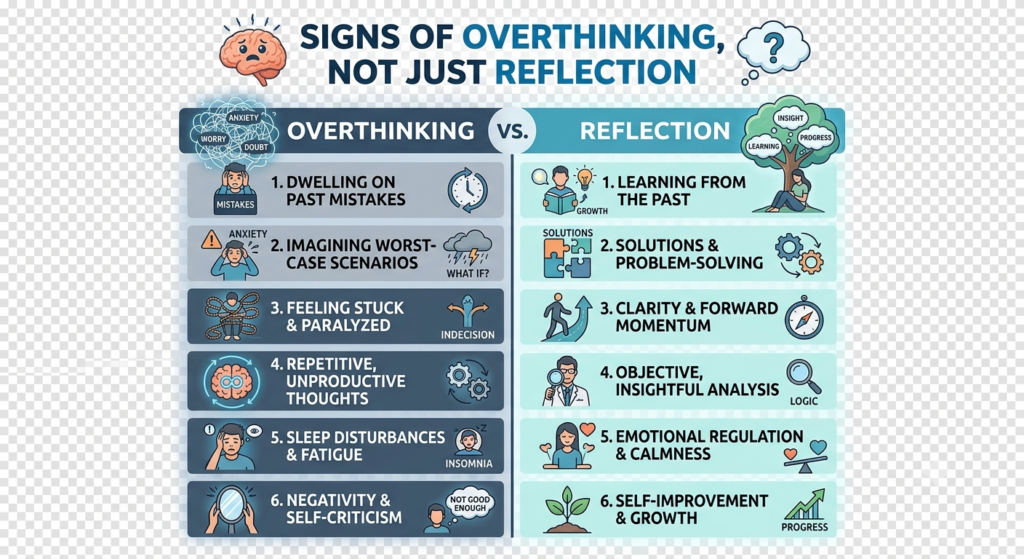
    Signs of Overthinking, Not Just Reflection

    Quick check, then.

    Hours instead of minutes? Ends in a decision, or nowhere? Clearer afterward, or just tired? Focused on the situation, or on blaming yourself?

    SignReflectionOverthinking
    TimeMinutesHours, days
    ResultA decisionNothing
    AfterClearDrained

    Generally, if tired beats clear, that’s your answer.

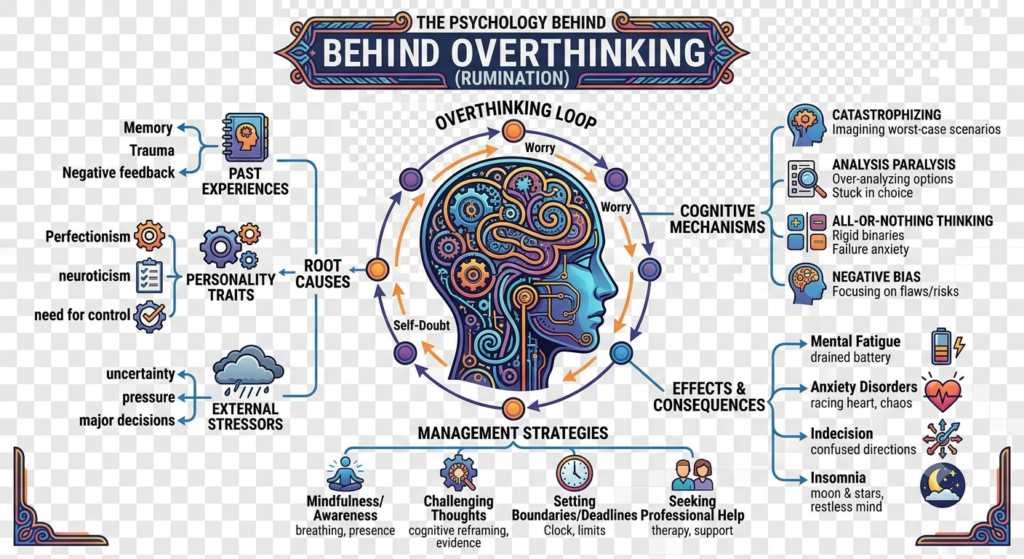
    Root Causes Behind Overthinking Psychology

    Rarely comes from nowhere. Usually, there’s a root.

    • Perfectionism: fear of the wrong choice.
    • Old criticism or trauma: always on edge, watching yourself.
    • Big transitions: new job, breakup, new city.
    • Trouble with uncertainty: needing to know outcomes before they happen.
    • High expectations, yours or someone else’s: overanalyzing so nobody’s disappointed.

    Some people overthink because they genuinely care about the people around them. Others hit it during life shifts divorce, career change when the future suddenly stops feeling predictable. Either way, it shows up right when certainty is hardest to find.

    What Overthinking Actually Costs You

    Not just uncomfortable. In fact, it’s measurable.

    It’s linked to higher anxiety, low mood, and burnout. Consequently, it shows up physically too headaches, bad sleep, fatigue.

    Overthinking Reduces Mental Flexibility

    There’s a 2023 study, BPS Global Open Science, that found chronic overthinkers show less mental flexibility. In other words, they get stuck in loops instead of adjusting. That same rigidity turns small things into threats a late reply “means” someone’s upset, even when it doesn’t mean anything at all.

    Overthinking Affects Relationships and Presence

    There’s also a cost people miss. You’re present, physically, with someone. Yet half your head is somewhere else an old worry, a new one. Ironic, really. The more you overthink to avoid messing things up with people. The more you end up missing what’s happening right there in front of you.

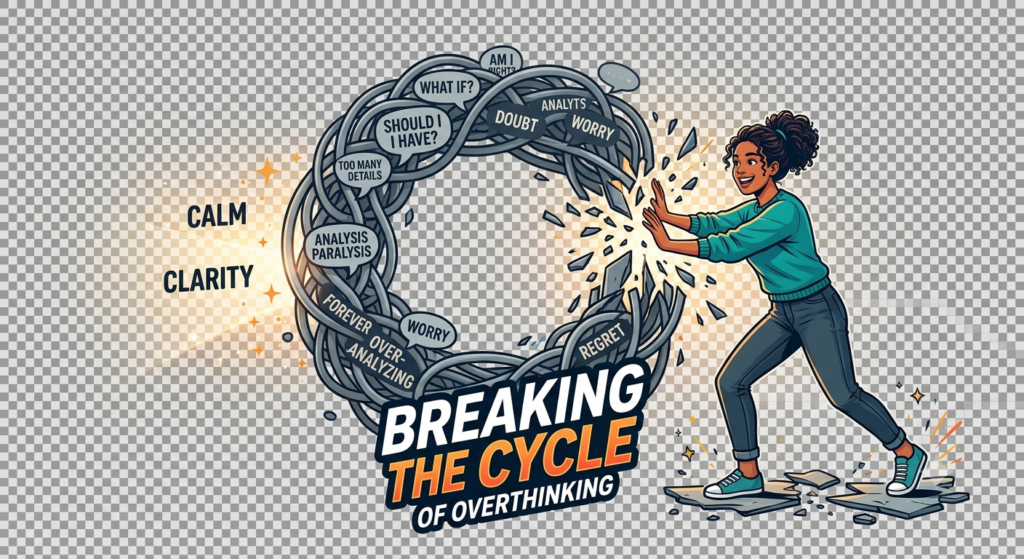
    Breaking the Cycle of Overthinking

    No single fix, unfortunately. Instead, it’s small habits, repeated, until they stick.

    • Recognize and Name the Thought Pattern: Name it first. Just “I’m overthinking right now” creates a gap. Small, but that’s where change starts.
    • Set a Time Limit for Worry: Ten minutes, worry on purpose. Once the timer’s up, redirect. Sounds too simple, yet it works anyway, because it lets your brain stop chasing closure it won’t find.
    • Redirect Your Mind with Physical Activity: Move next. Walk, workout, anything physical. This pulls you back into your body, and out of the loop.
    • Write Your Thoughts in a Journal: Also, write it out. Vague thoughts, once on paper, get easier to look at and easier to release, too.
    • Talk to Someone You Trust: Finally, talk to someone. Overthinkers tend to assume their thoughts are airtight. A second opinion cracks that open fast.
    • Practice These Habits Consistently: None of it erases overthinking completely. Nothing really does. But used often enough, it shrinks from something running your day into something you manage.

    When to Get Help for Overthinking

    Sleep’s off, Work’s suffering, Relationships too. Or it feels tangled with anxiety, depression, something older. At that point, it’s time to talk to someone licensed.

    Overthinking isn’t a diagnosis by itself. Often, though, it’s a sign of something underneath. A therapist helps find that root not just manage the surface, over and over.

    Exhausting, overthinking is, But not permanent. It’s a habit the brain picked up which means it’s one it can drop, too. You don’t need a perfect answer to every “what if.” Just enough space to stop asking long enough to live your life.

    Research Spotlight

    Mindfulness Reduced Rumination

    Researchers examined adults who completed an 8-week Mindfulness-Based Stress Reduction (MBSR) program. After the program, participants showed lower levels of rumination, fewer depressive symptoms, and improved overall well-being.

    Treating Rumination Directly Improved Recovery

    A PubMed case report described a woman who struggled with chronic rumination for nearly 20 years. Instead of treating only the underlying diagnosis, clinicians focused directly on reducing repetitive thinking.

    Frequently Asked Questions

    Is overthinking a mental illness?

    No. Usually, it’s a symptom riding along with anxiety or depression, not a standalone diagnosis.

    Do smart people overthink more?

    Not really, despite the myth. Overthinking runs on anxiety and fear of uncertainty, not IQ.

    How long does it take to stop overthinking?

    Can overthinking psychology explain why it feels so hard to stop?

    Yes, largely. Neuroplasticity and the default mode network both play a role, which is why the habit feels automatic rather than chosen.

    Does journaling actually help?

    Usually, yes. It puts vague thoughts into words, and words, in turn, are easier to examine than a loop stuck in your head.

    Is overthinking the same as anxiety?

    Related, but not identical. Anxiety is broader emotional and physical. Overthinking, meanwhile, is more of a thought pattern that anxiety often fuels.

    Final Thought

    Exhausting, overthinking is. But not permanent. It’s a habit the brain picked up which means it’s one it can drop, too.

    So, start small, Catch the loop, Set a limit, Move, Write it down.

    You don’t need a perfect answer to every “what if.” Just enough space to stop asking long enough to live your life