
Introduction
Ask five people what separates a data scientist from a data analyst. You’ll get five different answers half of them wrong, a couple flatly contradicting each other. At least one person just shrugging.
It’s one of the most confused pairings in tech right now, right up there with “developer” versus “engineer,” which is a whole separate headache. Some of that confusion’s fair, to be honest. The two roles share tools, share a starting point, sometimes even share the same desk.
But the actual day-to-day work? Genuinely different, once you get past the job titles. Here’s the real breakdown, no fluff.
What Data Analytics Actually Is

Data analytics is about answering questions with data you’ve already got sitting around. A retail chain wants to know why sales dipped in March. An analyst pulls the numbers, slices them by region and product line.
The work leans hard on SQL, Excel, and visualization tools like Tableau or Power BI. Analysts spend a big chunk of their week just cleaning messy data way more than people expect building reports. Explaining what happened in plain English to folks who really don’t want to look at a formula.
It’s backward-looking work, mostly. What happened, and why? That’s the whole job, really. Not glamorous, sure, but a sharp analyst can save a company real money just by catching a pattern. Nobody else bothered to look for in last quarter’s numbers.
What Data Science Actually Is
Data science asks a different question entirely: what’s going to happen next. And can we build something that predicts it without a person babysitting it every step? A data scientist doesn’t just explain last month’s sales dip they build a model that flags the next one before it even shows up on anyone’s radar.
That means a lot more coding, usually in Python or R, plus a much heavier stats and machine learning background than most analysts ever touch. Data scientists build predictive models, train algorithms.
Messier work too, way messier than people expect walking in. Data almost never comes clean, models break in weird unpredictable ways at 2 am. A data scientist often spends more hours debugging a broken pipeline than actually building the flashy model everyone loves to brag about in interviews.
Side by Side: Analytics vs. Science
| Aspect | Data Analytics | Data Science |
|---|---|---|
| Core question | What happened, and why? | What will happen next? |
| Main tools | SQL, Excel, Tableau, Power BI | Python, R, TensorFlow, SQL |
| Typical output | Dashboards, reports | Predictive models, algorithms |
| Time orientation | Backward-looking | Forward-looking |
| Math depth | Descriptive statistics | Statistics, linear algebra, ML |
| Coding required | Light to moderate | Heavy |
Where the Two Actually Overlap
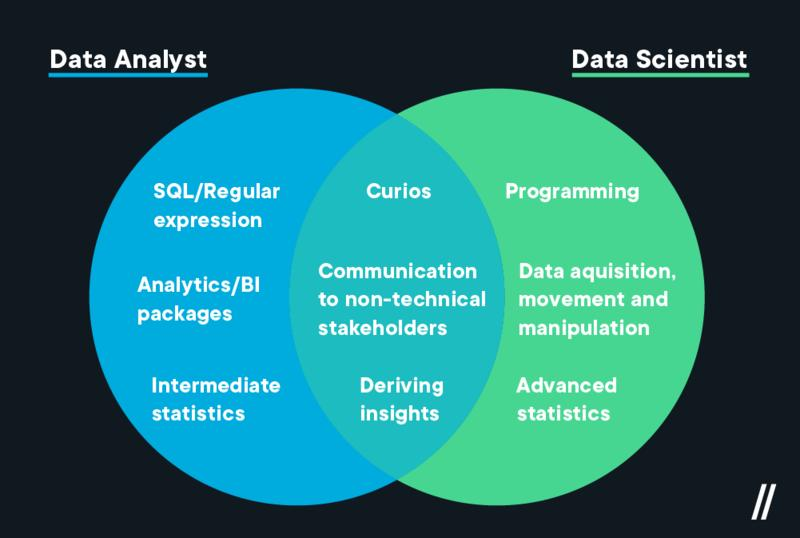
Here’s the part nobody really tells you: both roles start in the same place. Someone’s got to pull the data, clean it up, and make sure it isn’t garbage before anyone can do anything useful with it at all. Analysts and data scientists both live in that unglamorous step more than either side likes to admit.
SQL shows up on nearly every job listing for both roles I mean nearly every single one. Basic Python’s creeping into analyst postings too, which wasn’t really the case a few years back. Plenty of analysts eventually pick up machine learning skills and quietly slide into data science work without ever officially changing job titles.
The line between these two is a lot blurrier in the real world than any tidy textbook diagram makes it look. And honestly, a lot of smaller companies just don’t bother splitting the roles at all. One person does both jobs, whatever the business card happens to say.
Skills Each Role Actually Needs
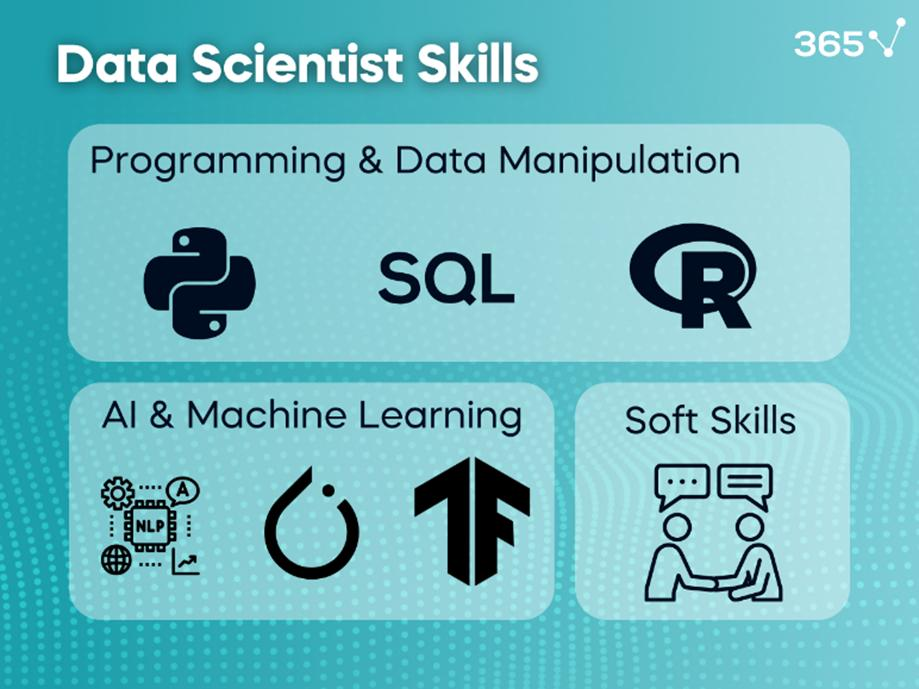
Data analysts need sharp instincts with numbers, sure, but just as important. They need to explain what they found to people who’ve never opened a pivot table in their life. Half the job’s translation, not calculation if we’re being honest about it.
- Strong SQL and spreadsheet skills
- Comfort with dashboard tools like Tableau or Looker
- Clear, jargon-free communication
- A sharp eye for spotting patterns and outliers
Data scientists need a deeper technical toolkit, plus enough patience to sit with a broken model for six straight hours without losing their mind completely.
- Solid coding ability, usually Python or R
- Real understanding of statistics and machine learning
- Experience with data pipelines and cloud platforms
- Comfort wrestling with messy, incomplete, or unlabeled data
Career Paths and Pay
| Factor | Data Analyst | Data Scientist |
|---|---|---|
| Typical entry path | Business, stats, or bootcamp | CS, stats, or math degree |
| Average US salary (2024) | $70,000–$95,000 | $110,000–$150,000+ |
| Common next step | Senior analyst, BI lead | ML engineer, senior data scientist |
| Time to break in | Faster, fewer prerequisites | Slower, steeper learning curve |
Salaries shift a lot by city and industry, obviously. A data scientist in finance or big tech usually out-earns the same title at a mid-sized retailer by a pretty wide margin. Still, that general gap holds up almost everywhere you look, city to city.
So Which One Should You Choose?
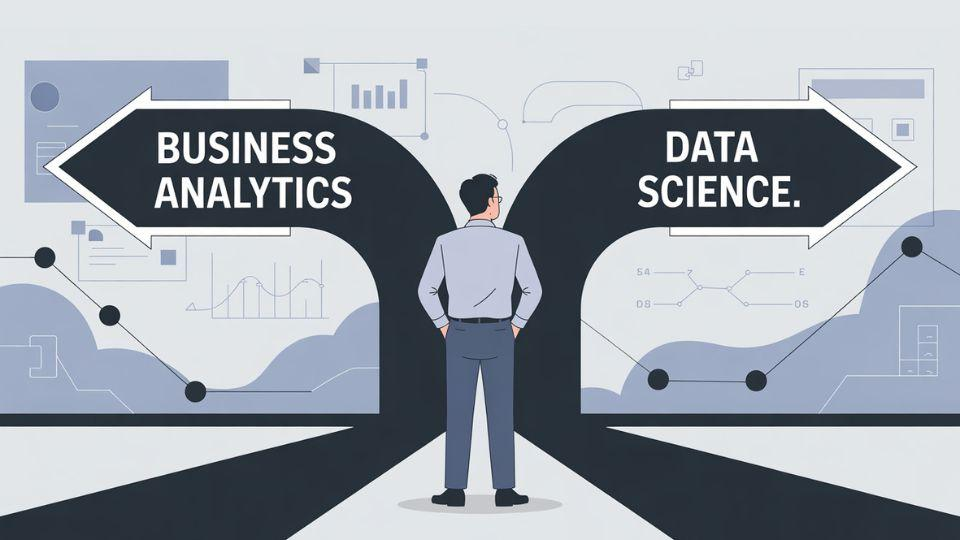
If you like solving concrete business problems and explaining what you found in plain terms, analytics is the faster, friendlier way in, honestly. You’ll be genuinely useful within months, not years, and the skill floor to get started is a lot lower than people assume.
If you’re more drawn to building things models, algorithms, systems that basically run themselves data science is worth the longer runway. It takes more math, more code, and a lot more patience with failure, since models break constantly before they ever actually work right.
A ton of people start in analytics and work their way into data science later on, and that’s genuinely fine. That’s not some consolation prize. It’s one of the more common, and more sensible, ways into the field, honestly.
Where This Is All Heading

The line between these two roles keeps getting blurrier, not sharper, and I don’t see that trend reversing anytime soon. AI tools are automating a lot of the manual reporting work analysts used to grind through by hand. Which is pushing analytics roles toward more strategic, judgment-heavy work instead.
Data science, meanwhile, keeps getting more accessible, since pre-built models and AI platforms are lowering the coding bar. That used to keep a lot of people out entirely. Neither job’s going anywhere anytime soon, not really.
But the skills each one demands five years from now probably won’t look much like they do today. So whichever path you pick, staying curious matters a lot more than obsessing over which title sounds better on LinkedIn.
Real-World Case Studies
Netflix Uses Analytics and Data Science Together
Netflix is using data analytics and data science to enhance the user experience. Data analysts track viewing habits, engagement stats, and subscriber patterns to grasp user viewing habits and why they opt out of the platform.
Walmart Improves Inventory Management
Walmart analyzes billions of retail transactions every year. Data analysts review past sales, seasonal demand and regional buying patterns to find inventory patterns. Forecasting models are valuable tools for data scientists to predict future demand.
This helps stores keep their inventory at the right level and minimize waste and storage costs. Takeaway: Historical analysis helps inform forecasting models to enhance supply chain efficiency.
Frequently Asked Questions (FAQs)
Which is the main distinction between a data analyst and a data scientist?
A data analyst is concerned with analyzing past data to answer questions such as “What happened?” and “Why did it happen?” A data scientist creates predictive models to answer the questions of “What will happen next?” and “How can we automate decision
Is there a way that a data analyst could become a data scientist?
Yes, most data scientists start their job in Analytical roles. Analysts can work their way up to the data science role by acquiring the knowledge of Python, statistics, machine learning and data engineering concepts.
What’s the higher paying job: In most markets?
Data scientists command higher salaries than other roles, as they need to have a higher level of technical expertise in programming, mathematics and machine learning.
Is there a need to learn programming for data analytics?
While it is helpful to know basic programming, many analyst positions are based more on SQL, Excel. Visualization software like Tableau or Power BI. Python is gaining in popularity but is not mandatory for all positions.
Conclusion
t’s not a question of which career is “better” to pursue, it is a question of which career is a better choice for you to pursue. Data analysts translate data into meaningful insights for businesses, enabling them to interpret what has occurred and why.
Data scientists take it one step further, creating predictive models and intelligent systems that aid businesses in anticipating what is to come. The fortunate part is that these careers are interrelated much more than people think. Business knowledge, critical thinking, strong SQL skills.
Data cleaning are useful for both jobs. Many professionals start off as data analysts and then learn Python, machine learning, and then over time become data scientists.
Leave a Reply