Category: Technology

  • Data Science vs. Data Analytics: What’s the Actual Difference?

    Data Science vs. Data Analytics: What’s the Actual Difference?

    Introduction

    Ask five people what separates a data scientist from a data analyst. You’ll get five different answers half of them wrong, a couple flatly contradicting each other. At least one person just shrugging.

    It’s one of the most confused pairings in tech right now, right up there with “developer” versus “engineer,” which is a whole separate headache. Some of that confusion’s fair, to be honest. The two roles share tools, share a starting point, sometimes even share the same desk.

    But the actual day-to-day work? Genuinely different, once you get past the job titles. Here’s the real breakdown, no fluff.

    What Data Analytics Actually Is
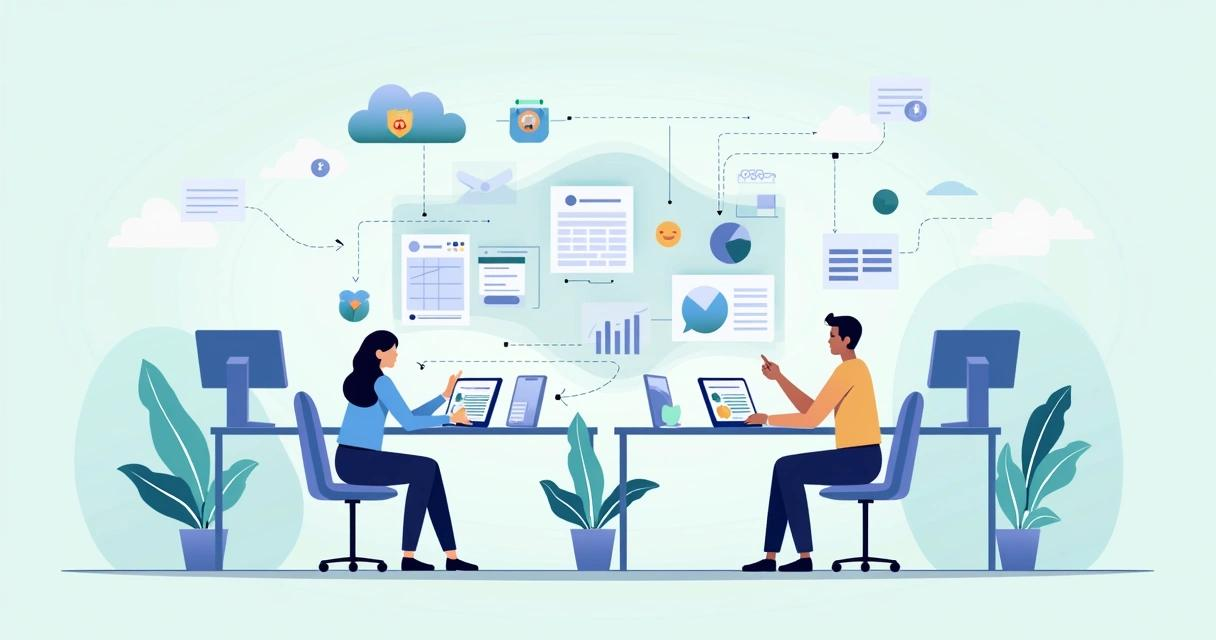
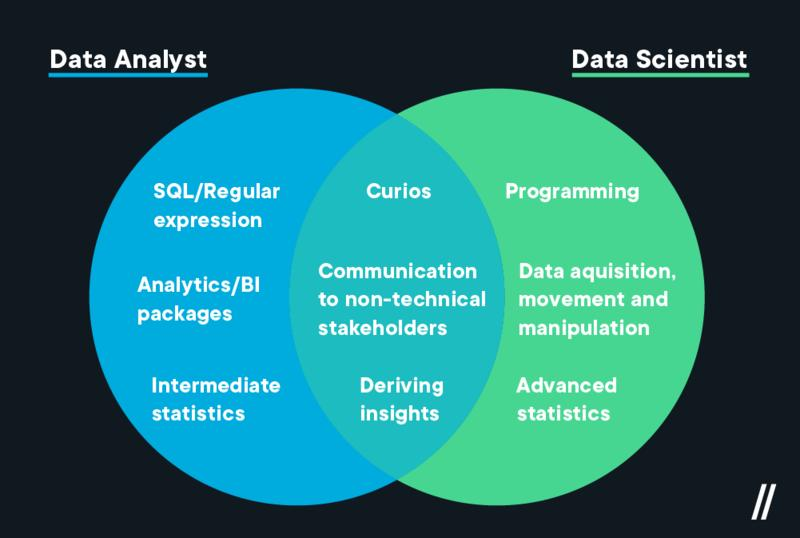
    Data analytics is about answering questions with data you’ve already got sitting around. A retail chain wants to know why sales dipped in March. An analyst pulls the numbers, slices them by region and product line.

    The work leans hard on SQL, Excel, and visualization tools like Tableau or Power BI. Analysts spend a big chunk of their week just cleaning messy data way more than people expect building reports. Explaining what happened in plain English to folks who really don’t want to look at a formula.

    It’s backward-looking work, mostly. What happened, and why? That’s the whole job, really. Not glamorous, sure, but a sharp analyst can save a company real money just by catching a pattern. Nobody else bothered to look for in last quarter’s numbers.

    What Data Science Actually Is

    Data science asks a different question entirely: what’s going to happen next. And can we build something that predicts it without a person babysitting it every step? A data scientist doesn’t just explain last month’s sales dip they build a model that flags the next one before it even shows up on anyone’s radar.

    That means a lot more coding, usually in Python or R, plus a much heavier stats and machine learning background than most analysts ever touch. Data scientists build predictive models, train algorithms.

    Messier work too, way messier than people expect walking in. Data almost never comes clean, models break in weird unpredictable ways at 2 am. A data scientist often spends more hours debugging a broken pipeline than actually building the flashy model everyone loves to brag about in interviews.

    Side by Side: Analytics vs. Science
    AspectData AnalyticsData Science
    Core questionWhat happened, and why?What will happen next?
    Main toolsSQL, Excel, Tableau, Power BIPython, R, TensorFlow, SQL
    Typical outputDashboards, reportsPredictive models, algorithms
    Time orientationBackward-lookingForward-looking
    Math depthDescriptive statisticsStatistics, linear algebra, ML
    Coding requiredLight to moderateHeavy

    Where the Two Actually Overlap

    Here’s the part nobody really tells you: both roles start in the same place. Someone’s got to pull the data, clean it up, and make sure it isn’t garbage before anyone can do anything useful with it at all. Analysts and data scientists both live in that unglamorous step more than either side likes to admit.

    SQL shows up on nearly every job listing for both roles I mean nearly every single one. Basic Python’s creeping into analyst postings too, which wasn’t really the case a few years back. Plenty of analysts eventually pick up machine learning skills and quietly slide into data science work without ever officially changing job titles.

    The line between these two is a lot blurrier in the real world than any tidy textbook diagram makes it look. And honestly, a lot of smaller companies just don’t bother splitting the roles at all. One person does both jobs, whatever the business card happens to say.

    Skills Each Role Actually Needs
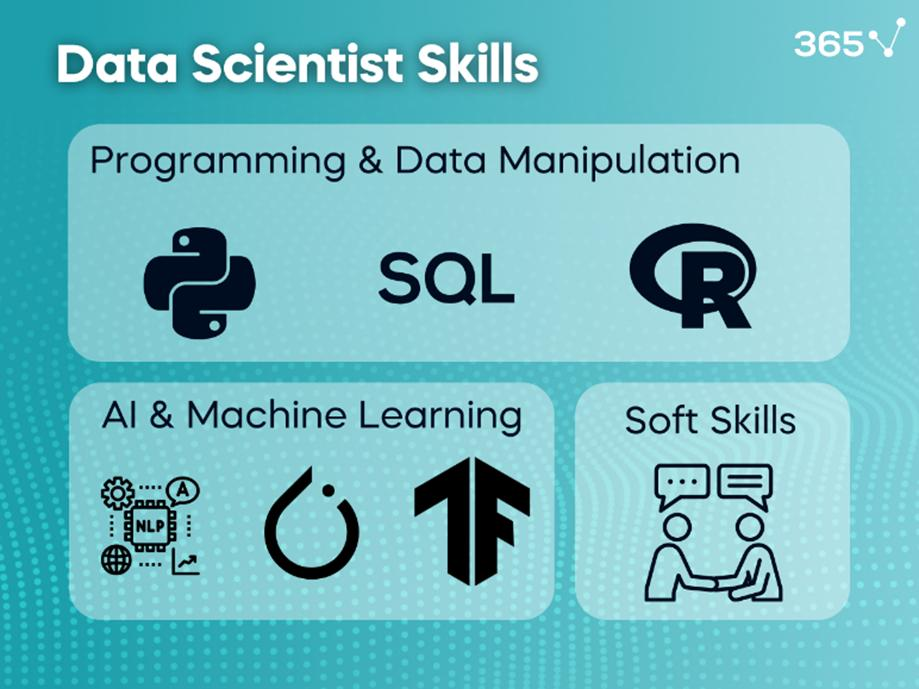
    Data analysts need sharp instincts with numbers, sure, but just as important. They need to explain what they found to people who’ve never opened a pivot table in their life. Half the job’s translation, not calculation if we’re being honest about it.

    • Strong SQL and spreadsheet skills
    • Comfort with dashboard tools like Tableau or Looker
    • Clear, jargon-free communication
    • A sharp eye for spotting patterns and outliers

    Data scientists need a deeper technical toolkit, plus enough patience to sit with a broken model for six straight hours without losing their mind completely.

    • Solid coding ability, usually Python or R
    • Real understanding of statistics and machine learning
    • Experience with data pipelines and cloud platforms
    • Comfort wrestling with messy, incomplete, or unlabeled data

    Career Paths and Pay

    FactorData AnalystData Scientist
    Typical entry pathBusiness, stats, or bootcampCS, stats, or math degree
    Average US salary (2024)$70,000–$95,000$110,000–$150,000+
    Common next stepSenior analyst, BI leadML engineer, senior data scientist
    Time to break inFaster, fewer prerequisitesSlower, steeper learning curve

    Salaries shift a lot by city and industry, obviously. A data scientist in finance or big tech usually out-earns the same title at a mid-sized retailer by a pretty wide margin. Still, that general gap holds up almost everywhere you look, city to city.

    So Which One Should You Choose?
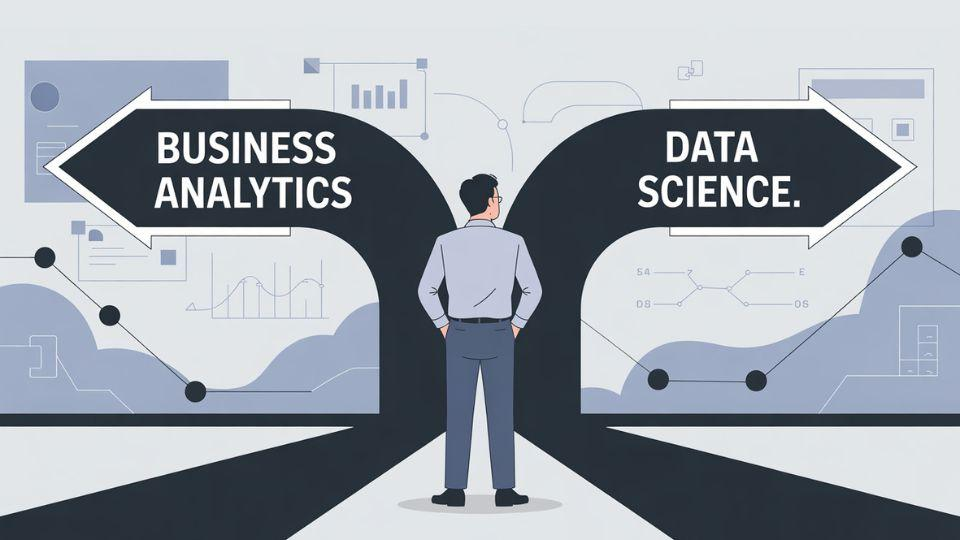
    If you like solving concrete business problems and explaining what you found in plain terms, analytics is the faster, friendlier way in, honestly. You’ll be genuinely useful within months, not years, and the skill floor to get started is a lot lower than people assume.

    If you’re more drawn to building things models, algorithms, systems that basically run themselves data science is worth the longer runway. It takes more math, more code, and a lot more patience with failure, since models break constantly before they ever actually work right.

    A ton of people start in analytics and work their way into data science later on, and that’s genuinely fine. That’s not some consolation prize. It’s one of the more common, and more sensible, ways into the field, honestly.

    Where This Is All Heading
    The line between these two roles keeps getting blurrier, not sharper, and I don’t see that trend reversing anytime soon. AI tools are automating a lot of the manual reporting work analysts used to grind through by hand. Which is pushing analytics roles toward more strategic, judgment-heavy work instead.

    Data science, meanwhile, keeps getting more accessible, since pre-built models and AI platforms are lowering the coding bar. That used to keep a lot of people out entirely. Neither job’s going anywhere anytime soon, not really.

    But the skills each one demands five years from now probably won’t look much like they do today. So whichever path you pick, staying curious matters a lot more than obsessing over which title sounds better on LinkedIn.

    Real-World Case Studies

    Netflix Uses Analytics and Data Science Together

    Netflix is using data analytics and data science to enhance the user experience. Data analysts track viewing habits, engagement stats, and subscriber patterns to grasp user viewing habits and why they opt out of the platform.

    Walmart Improves Inventory Management

    Walmart analyzes billions of retail transactions every year. Data analysts review past sales, seasonal demand and regional buying patterns to find inventory patterns. Forecasting models are valuable tools for data scientists to predict future demand.

    This helps stores keep their inventory at the right level and minimize waste and storage costs. Takeaway: Historical analysis helps inform forecasting models to enhance supply chain efficiency.

    Frequently Asked Questions (FAQs)

    Which is the main distinction between a data analyst and a data scientist?

    A data analyst is concerned with analyzing past data to answer questions such as “What happened?” and “Why did it happen?” A data scientist creates predictive models to answer the questions of “What will happen next?” and “How can we automate decision

    Is there a way that a data analyst could become a data scientist?

    Yes, most data scientists start their job in Analytical roles. Analysts can work their way up to the data science role by acquiring the knowledge of Python, statistics, machine learning and data engineering concepts.

    What’s the higher paying job: In most markets?

    Data scientists command higher salaries than other roles, as they need to have a higher level of technical expertise in programming, mathematics and machine learning.

    Is there a need to learn programming for data analytics?

    While it is helpful to know basic programming, many analyst positions are based more on SQL, Excel. Visualization software like Tableau or Power BI. Python is gaining in popularity but is not mandatory for all positions.

    Conclusion

    t’s not a question of which career is “better” to pursue, it is a question of which career is a better choice for you to pursue. Data analysts translate data into meaningful insights for businesses, enabling them to interpret what has occurred and why.

    Data scientists take it one step further, creating predictive models and intelligent systems that aid businesses in anticipating what is to come. The fortunate part is that these careers are interrelated much more than people think. Business knowledge, critical thinking, strong SQL skills.

    Data cleaning are useful for both jobs. Many professionals start off as data analysts and then learn Python, machine learning, and then over time become data scientists.


  • Why Cybersecurity Actually Matters (And Why You Can’t Ignore It)

    Why Cybersecurity Actually Matters (And Why You Can’t Ignore It)

    Introduction

    Picture this: you check your bank balance during your lunch break, order groceries on an app. Message your doctor about a prescription refill all before 1 pm, without thinking twice about any of it.

    None of that would feel safe, or even work at all, without something quietly running in the background to keep it that way. That something’s cybersecurity, whether you ever notice it or not.

    Technology’s made life genuinely easier, no argument there. Banking, shopping, learning, healthcare, running a business it’s all a few taps away now.

    So let’s actually get into it what cybersecurity is, why it matters more than most people realize. What the real threats look like in practice.

    What Cybersecurity Actually Is

    NIST the National Institute of Standards and Technology. If you want the full name defines cybersecurity as the discipline of protecting systems, networks, and data from digital attacks. That’s the official version.

    In plain terms? It’s the habits, tools, and policies that keep your stuff from getting stolen, broken, or held hostage online. Think of it like an immune system for your digital life, honestly, that’s the easiest way to picture it. Just like your body spots and fights off pathogens before they do real damage good.

    Cybersecurity catches threats malware, mostly before they wreck your data or hijack your device entirely. Malware covers a lot of ground: viruses, worms, spyware, and a handful of nastier variants nobody wants to meet.

    Most of it gets in the same boring, unglamorous way someone clicks a link they really shouldn’t have. That’s the whole reason good cybersecurity isn’t about reacting after the damage is done. It’s about staying ahead of that click before it ever happens.

    The Three Pillars: Confidentiality, Integrity, Availability

    Data protection usually boils down to three ideas, often bundled together as the CIA triad. No relation to the actual CIA, just an unfortunate coincidence in acronyms that trips people up constantly.

    Confidentiality means only the right people can see your information. Your bank statement shouldn’t be readable by some stranger three desks over, obviously.

    Integrity means your data stays exactly as it should be. Nobody’s quietly editing your numbers or swapping details behind your back while you’re not looking.

    Availability means your system’s there when you actually need it not conveniently down for maintenance the one moment it matters most.

    Organizations lean on firewalls, antivirus software, and encryption to hold all three together at once. When your bank shows you your balance, and only your balance. That’s the CIA triad quietly doing its job in the background, no fanfare, no notice.

    Why This Actually Matters to You

    It’s easy to treat cybersecurity as someone else’s problem an IT department’s headache, not yours to worry about. That’s a mistake, and a pretty common one, even among people who really should know better.

    Good cybersecurity protects your personal and financial information from people who’d genuinely love to get their hands on it. It stops unauthorized changes to your accounts, prevents the kind of financial loss that comes from one careless click.

    And for businesses especially it builds the customer trust that keeps people coming back instead of walking away for good. There’s a bigger picture too, one people don’t think about until it’s already too late.

    Beyond individuals, cybersecurity protects national infrastructure: power grids, hospitals, water systems, the stuff that genuinely can’t afford to go down for even an hour. When that fails, it’s not an inconvenience. It’s a crisis, full stop.

    Phishing: The Oldest Trick That Still Works

    Phishing’s been around forever at this point, and somehow it still works embarrassingly well. Scammers send fake emails or spin up fake websites dressed up to look exactly like your bank. Your workplace, or a delivery company you actually use every week.

    The email asks you to “verify your account” or “confirm your password,” usually with some urgent subject line designed to make you panic a little. You click, you type your info into what looks like a totally legitimate login page.

    Just like that someone else has your credentials. No real hacking required. Just a convincing disguise and one moment of not looking closely enough.

    Threat TypeHow It WorksCommon Warning Sign
    PhishingFake emails or websites mimic real ones to steal credentialsUrgent tone, mismatched sender address
    RansomwareMalware locks your files until you pay to unlock themSudden inability to open files, ransom note pop-up
    Social EngineeringManipulates people directly instead of hacking systemsUnsolicited calls asking for OTPs or passwords

    Ransomware: When Your Own Data Gets Held Hostage

    Ransomware takes it a step further, and honestly it’s the scarier of the two. Instead of just stealing your information, it locks it your files, your website, your company’s entire database. And demands payment to hand back the keys.

    Picture a mid-sized company showing up one Monday morning to find every file encrypted. A ransom note sitting on every screen in the office. Nothing works. Orders can’t be processed, records can’t be pulled up, and the business just… stops.

    Someone pays or manages to claw everything back from backups that, fingers crossed, actually worked. It’s not some rare, once-a-decade event either. It happens to companies every single week, and most of them never make the news.

    Social Engineering: Hacking the Person, Not the System

    Here’s the one that catches even genuinely careful people off guard. Social engineering skips the technical hacking part entirely and goes straight for manipulation. Instead of breaking into a system, attackers convince a real, actual person to just hand over access willingly.

    Classic version of it: someone calls, claims they’re from your bank, says your account’s been flagged, and asks you to read out your one-time password to “unlock” it. You read it out, trying to be helpful. That’s it game over, just like that.

    They didn’t need to hack a single thing. You handed them the key yourself, because the whole call sounded urgent and official enough to short-circuit your usual caution. Broadly speaking, social engineering is any attempt to pressure someone into an action that benefits the attacker.

    leaking information, approving a fraudulent transfer, granting access they really shouldn’t. Reports from 2019 and 2020 flagged it as one of the fastest-growing threats companies were dealing with at the time, and if anything, that trend’s only picked up speed since.

    Who Actually Gets Hurt

    Individuals end up paying the steepest personal price, in a lot of ways. Once your information’s out there, attackers can use it to pressure you, threaten to leak private details. It’s not purely financial either there’s a real emotional weight to realizing your privacy just got compromised by a stranger.

    Organizations face a different flavor of damage. Beyond the direct financial hit, there’s legal exposure if customer data wasn’t properly protected, and regulators genuinely don’t go easy on that anymore. Add in the reputational damage once customers hear their information wasn’t safe.

    That’s why companies invest in layered defenses: strong security policies, regular staff training that actually sticks, and multi-factor authentication. A second lock on the door, even if someone’s already got the first key in hand.

    Building Better Habits

    None of this requires a computer science degree, for what it’s worth. A handful of consistent habits go a surprisingly long way:

    • Update your software regularly those “annoying” update prompts usually patch real security holes, not just add features nobody asked for
    • Use strong, unique passwords instead of recycling the same one across five different accounts
    • Turn on multi-factor authentication wherever it’s offered, even if it feels like one extra annoying step
    • Pause before clicking links in unexpected emails, even the ones that look totally official
    • Never, ever read out an OTP to someone who called you first — banks don’t ask for that, period

    Where the Legal Side Fits In

    Governments have started taking this seriously too, not just individual companies scrambling on their own. Frameworks like the EU’s GDPR require businesses to handle personal data responsibly — collecting only what they actually need.

    Staying transparent about how it gets used, and getting real, informed consent before using it for anything. Ignoring these rules isn’t just risky from a security angle.

    It’s expensive, plain and simple. Violations can trigger fines large enough to genuinely hurt a company’s bottom line, stacked right on top of whatever damage the original breach already caused.

    The Bottom Line

    Cybersecurity isn’t some optional extra bolted onto modern life as an afterthought. At this point, it’s one of the things quietly holding everything else together banking, healthcare, business. Even the basic trust that your information actually stays yours.

    As technology keeps making life easier, the threats riding alongside it aren’t slowing down anytime soon. Here’s the good news, though: you don’t need to become a security expert to stay reasonably safe.

    A little awareness, a few consistent habits, and a healthy dose of skepticism toward “urgent” emails and calls go a long way toward keeping your digital life exactly that yours, and nobody else’s.

    Research Spotlight

    MGM Resorts Cyberattack (2023)

    In September 2023, MGM Resorts International experienced a massive cyber attack affecting casino operations, payment systems, digital room keys and hotel reservations.

    The company subsequently revealed that the attack cost the company about $100 million. The attackers say that they’re doing social engineering, which can be more effective as an attack than going after the technology itself.

    Frequently Asked Questions

    What are the legal requirements for data protection?

    Governments worldwide enforce data protection frameworks like the EU’s GDPR, which require businesses to minimize the data they collect.

    What are the top modern cyber threats?

    Phishing tricks people into handing over login details through fake messages that look almost too convincing. Ransomware locks up files until a ransom gets paid, no exceptions.

    Why does legal compliance actually matter?

    Because the penalties are real, not just theoretical. Laws like GDPR exist to force companies to take data protection seriously.

    Conclusion

    Nowadays, cybersecurity is no longer an IT issue, it’s a lifestyle one. Whether your business or you’re at your bank, shopping online or working from home, your personal and financial information depends on digital security.

    Cyber attacks are becoming ever more complex with phishing, ransomware and social engineering just a few of the ever more common attacks that are a growing threat, so awareness is as important as technology. The bright side is it isn’t rocket science to stay safe online.

    To reduce risk, simple security measures such as the use of strong, unique passwords, multi-factor authentication. Software updates and refraining from clicking on links from unknown sources can help.

    In the end, cybersecurity is a matter of cultivating savvy, consistent practices that will keep your digital persona safe now. Safeguard you for the future as the world continues to become increasingly digital.

  • Digital Minimalism in the AI Era: A Smarter Way to Live

    Introduction


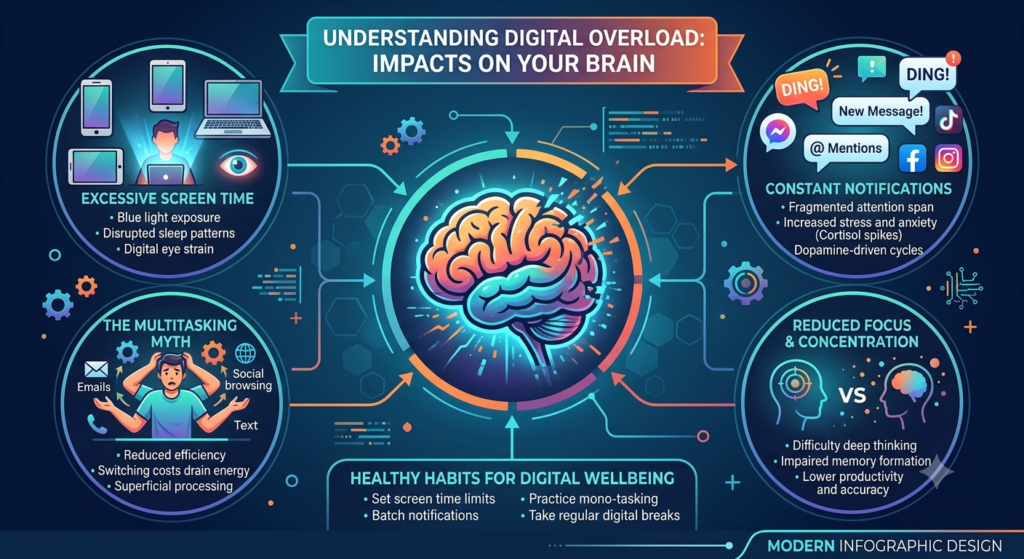
    You open your phone to check one notification. Forty minutes later you’re three AI chat tabs deep, half-reading some summarized news feed. You genuinely cannot remember what you opened the phone for in the first place.

    I’ve done this more times than I want to admit. That’s not a willpower problem. Really it’s just what living inside an attention economy that now runs partly on AI does to a completely normal brain.

    Digital minimalism in the AI era isn’t about quitting technology. Nobody’s asking you to do that. Honestly it wouldn’t even be realistic anymore for most people.

    It’s about being deliberate with a much noisier. Much smarter set of tools than the ones the original digital minimalism movement was ever built to handle. That distinction matters more than it sounds like it should.

    What Digital Minimalism Actually Means

    Cal Newport, who popularized the term, defined it as a philosophy. Where you focus your online time on a small number of activities that genuinely support your values. Skip the rest without feeling guilty about it. Not “less tech for the sake of less tech.”

    More like: fewer tools, used on purpose, used well.The core idea is that clutter has a cost even the digital kind you don’t consciously notice piling up. Every app, every feed, every open tab is quietly competing for the same limited resource.

    That idea landed hard back in 2019. It lands even harder now, and honestly it’s kind of wild it took this long to catch on more broadly.

    Why the AI Era Changes the Equation

    Here’s the actual shift. Old-school digital distraction was mostly human-curated other people’s posts. Other people’s opinions, algorithms just sorting content that other humans made. Annoying, sure. But it had a ceiling, at least.

    AI-generated content doesn’t really have that ceiling anymore. Feeds can be filled endlessly now, personalized in real time. Tuned moment to moment for whatever keeps you scrolling five more minutes.

    Chatbots are available for basically anything, at any hour of the night. Which sounds convenient right up until you realize you’ve quietly swapped out boredom actual. Productive boredom for a conversation partner that never gets tired and never logs off first.

    Practicing digital minimalism in the AI era means dealing with tools that are, frankly. Better at holding your attention than anything Newport was writing about back then. The attention economy didn’t go anywhere. It just got a serious upgrade.

    The Real Cost of Constant Digital Noise

    This isn’t just a vibes-based complaint, for what it’s worth. Attention researcher Gloria Mark, who’s been tracking screen behavior since 2004, found that average focus time on a single screen has dropped. From roughly two and a half minutes back then to under a minute today.

    Why Modern Apps Are So Hard to Resist

    Global device use now sits close to seven hours a day on average, according to recent tracking data. That’s before you even count the AI tools layered on top of everything else. None of that’s really about laziness, despite how it gets framed sometimes.

    It’s what happens when every app, feed, and assistant is engineered, deliberately, by genuinely smart people. To be a little more compelling than whatever you were actually trying to do in the first place.

    The Hidden Cost of Constant Digital Distraction

    The cost shows up small at first. Trouble finishing a book you actually like. Reaching for your phone mid-sentence of a real conversation without even deciding to.

    A vague, low-grade restlessness the second nothing’s demanding your attention. Give it enough time and it adds up to something bigger less deep work, less real rest. A harder time just sitting with your own thoughts for five minutes.

    Core Principles of Digital Minimalism in the AI Era

    A few ideas carry straight over from Newport’s original framework. Just updated for what’s actually competing for your attention now.

    Intentionality beats access, basically every time. Just because a tool exists doesn’t mean it earns a slot in your day. Worth asking what it’s actually replacing usually it’s silence, boredom, or a moment of real thought, not “wasted time” like it feels in the moment.

    Master a Few AI Tools Instead of Chasing Every New One

    Fewer tools, used deeper, tends to beat dabbling with every new AI app that launches this month. Pick the handful that genuinely earn a place and actually get good at them. Depth wins over breadth here, pretty much every single time I’ve seen it play out.

    Unstructured time needs protecting on purpose, because AI tools are excellent almost too excellent at filling every gap instantly.

    That’s exactly why some gaps need to stay empty. Walking without a podcast. Waiting in line without scrolling. Thinking a thought all the way through without a chatbot finishing it for you. And convenience deserves a little suspicion, honestly.

    Not everything that saves you time is actually serving you. Sometimes friction is the whole point it’s what makes a thing feel worth doing at all.

    A Practical Starting Framework

    You don’t need a dramatic 30-day digital detox to feel a difference here. Though Newport’s original version is still solid if you want to go all in. A lighter version works fine too, and it’s a lot easier to actually stick with.

    Start with a week of just noticing. Track, without judging yourself for it. Which apps or AI tools you reach for automatically almost before you’ve decided to. Most people are genuinely surprised by the pattern once they actually look at it in writing.

    Then pick one category to trim first. Probably whichever one feels the most automatic and the least intentional. Cut it for a week, not forever, just long enough to notice what naturally fills that space instead.

    Last step reintroduce tools one at a time, and ask yourself one plain question before letting each back in. Does this genuinely serve something I care about, or am I just used to having it around? That one question does more work than any app-blocker I’ve ever tried.

    Common Mistakes People Make

    The biggest one, by far, is treating this as all-or-nothing. Digital minimalism in the AI era isn’t about deleting every app and going off-grid somewhere. It’s about intentional use, and intentional use can absolutely include AI tools when they’re actually earning their spot.

    Another one that trips people up focusing only on time spent and ignoring how a tool leaves you feeling afterward. Twenty minutes on one app might leave you sharper.

    Twenty minutes on another might leave you foggy and a little irritable for no clear reason. Time alone doesn’t tell you the whole story.A lot of people also skip the reflection step entirely.

    Cut something out, feel better for a week, then slide right back into the old pattern without ever really asking. Why the tool had that much pull in the first place. Understanding the pull matters just as much as resisting it maybe more.

    Research Spotlight

    Microsoft Workplace Attention Study

    Microsoft Research and the University of California researchers studied information workers over the course of a few days to gain insight into the dynamic nature of attention throughout the working day.

    They discovered that sustained focus was strongly associated with context. And that regular use of the internet and interruptions affected sustained focus.

    Reclaiming Time Through Digital Minimalism

    Cal Newport, computer science professor, tells the tale of readers who went through a 30-day digital declutter in Digital Minimalism. One participant, known as “Robert,” was changing the way he used his smartphone by using a basic phone, setting time limits on internet use by parents.

    The experiment emphasizes that careful and planned technology use (and not the outright ban on technology) can have a profound impact on attention and happiness.

    Conclusion

    Digital minimalism in the AI era isn’t a rejection of technology, and it was never meant to be. It’s a recognition that the tools got sharper, faster, and considerably better at holding onto your attention than they were even a few years back

    Its means “just use more willpower” was never going to cut it on its own. Pick one thing from this article. Maybe a week of noticing, maybe protecting one unstructured hour a day. Start there. Let the rest follow whenever it’s ready to.

    Frequently Asked Questions

    Is digital minimalism in the AI era just about using less AI?

    Not exactly. It’s about using AI tools intentionally, for things that genuinely add value, rather than reaching for them out of habit or plain boredom.

    Do I need to quit social media to actually practice this?

    No. Some people do cut it entirely, sure, but the core idea is intentional use, not total elimination. What matters more is whether a tool is actually serving you or not.

    How long before I notice a difference?

    Most people notice something within the first week, even with a partial digital declutter usually less restlessness, and a bit more patience for unstructured time than they had before.

    Is this basically the same as a dopamine detox?

    Related, but not quite the same thing. Digital minimalism leans more toward long-term intentional habits; a dopamine detox is usually more of a short-term reset. Honestly, they work pretty well together.

    Can AI tools actually support digital minimalism instead of undermining it?

    Yes when used deliberately. A single well-chosen AI tool used with a clear purpose looks nothing like a dozen apps all competing for your attention at once.