Introduction
Okay so, real talk for a second. For most of my twenties I genuinely believed talent was something you either had or didn’t. Math people existed, art people existed.
I was neither, and honestly I’d made peace with that story way too early. Like somewhere around ninth grade after a particularly brutal algebra test I still remember getting a 61 on.Then a friend recommended Carol Dweck’s book to me at a coffee shop, half as a joke.
It annoyed me more than it inspired me at first because it meant. I couldn’t blame genetics anymore for stuff I was just avoiding. That’s kind of the whole deal with learning how to develop a growth mindset.
What Does “Growth Mindset” Even Mean, Practically Speaking?
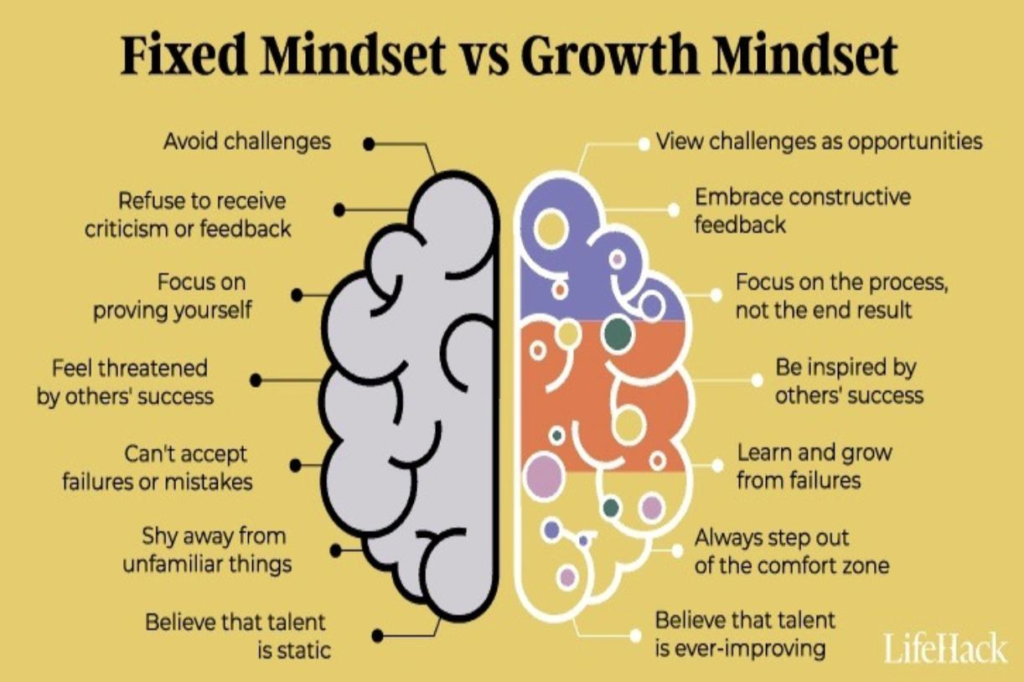
Let’s not overcomplicate this. A growth mindset isn’t just positive thinking with a fancier name. Carol Dweck, the Stanford psychologist behind the term. Basically found that people fall somewhere on a spectrum between believing their abilities are fixed. Versus believing they can be developed through effort.
Most People Have a Mix of Both Mindsets
Most of us aren’t purely one or the other, by the way. I’m growth-minded about writing and embarrassingly fixed-minded about anything involving a spreadsheet, if I’m being honest.
A fixed mindset says your intelligence and talent got locked in early and that’s basically that. A growth mindset says no, actually, effort and strategy move the needle, sometimes a lot. Which one sounds more useful to believe, even if you’re not sure it’s true yet?
| Fixed Mindset | Growth Mindset |
|---|---|
| “I’m bad at this” | “I’m not good at this yet” |
| Avoids challenges | Leans into them, reluctantly sometimes |
| Effort feels like proof you’re not talented | Effort is just the process |
| Feedback stings and gets ignored | Feedback stings but gets used anyway |
I’ll be straight with you I don’t sit at 100% growth mindset all day. Nobody does, no matter what their LinkedIn bio says. I still catch myself thinking “I’m just not a numbers person” more often than I’d like. The point isn’t erasing that voice completely. It’s noticing it faster than you used to.
Does Any of This Actually Matter, or Is It Corporate Fluff?
I was skeptical of this part too, not gonna lie. A lot of “mindset” talk online feels like it’s selling something. But then I looked at the actual numbers, and okay, fine, they’re hard to dismiss. Forbes covered a TalentLMS study where 80% of senior execs said employee growth mindsets directly move revenue.
The Link Between Growth Mindset, Trust, and Success
Nearly nine out of ten called it important for long-term success. A majority also reported real productivity gains but only once companies actually built it into daily habits. Instead of slapping it on a values poster in the breakroom that nobody reads past week one.
There’s a trust piece too that caught me off guard. People at growth-mindset companies were way more likely to describe their coworkers as trustworthy. And more likely to feel like their workplace actually tolerated risk instead of quietly punishing every failed attempt six months later during review season.
Look, the stats are nice. But here’s the honest version: a fixed mindset is just tiring. You spend so much energy protecting your ego that there’s barely anything left over to actually improve at the thing.
So How Do You Actually Build a Growth Mindset? (The Non-Vague Version)
Most articles get real fuzzy right about here. Let’s not do that.
1. Catch the word “can’t.” Every time “I can’t do this” shows up in your head, tack on one word yet. Feels small, almost dumb honestly, the first dozen times. Keep doing it anyway. The language shift does something to your brain that logic alone doesn’t.
2. Stop treating failure like a courtroom verdict. A bad attempt isn’t a permanent ruling on who you are. It’s just data. Annoying, embarrassing data sometimes, but data. Ask what it taught you, not what it proves about you.
3. Ask for feedback before you feel ready. This is the hardest one for me, still. Old me avoided feedback like it was going to hurt physically. These days I ask anyway, even though some small part of me still braces for it every single time.
4. Watch what you’re praising. If you only celebrate wins, you’ll start quietly avoiding anything you’re not guaranteed to win. Praise the messy attempt instead. Praise the part where you looked kind of clueless but kept going.
5. Pick your circle carefully. Mindsets are contagious whether you like it or not. If everyone around you treats trying hard as embarrassing, that rubs off eventually, even on people who think they’re immune to peer pressure.
A handful of small habits that actually stuck for me:
- Jotting down one mistake each night, with a lesson attached, even a dumb one
- Asking one honest person for feedback every week, even when I don’t want to
- Trying something I’m bad at once a month, just to stay okay with feeling incompetent
- Saying “yet” out loud, which felt ridiculous for about two weeks and then stopped feeling ridiculous
A Small, Slightly Embarrassing Story

A few years back I signed up for a beginner guitar class on a Tuesday night. Mostly on a dare from a friend named Priya who plays way better than me and still does, honestly.
I was bad, like, genuinely bad my fingers wouldn’t cooperate, chord changes took forever, and the instructor had to slow the whole group down twice because of me in one class alone. Old me would’ve quit by week two and told everyone “guitar just isn’t my thing,” case closed.
Small, Consistent Adjustments Beat Natural Talent
Instead I started keeping this dumb little notebook, not for songs, just for mistakes. Every practice session I’d scribble down one thing that went wrong and one tiny adjustment for next time.
Sounds almost too simple to actually work. But three months in, chord changes that used to eat up a full second happened almost automatically. Nobody handed me talent overnight. I just stopped treating every wrong note as final proof I didn’t belong there.
Growth Comes From Staying in the Game After Setbacks
That’s really the whole idea, once you strip away the psychology jargon. You’re not chasing some permanent, unshakable confidence that never wobbles. You’re just getting slightly better at staying in the room after things go wrong, over and over, until it’s not such a big deal anymore.
Where People Usually Mess This Up
Not sugarcoating this part:
- Grinding harder without ever changing your approach isn’t growth, it’s just stubbornness with extra steps
- Treating a growth mindset like forced positivity instead of honest self-reflection
- Quitting after one rough attempt and deciding that proves the whole thing “doesn’t work”
- Comparing your messy day-one self to somebody else’s polished year-five self
None of this means you’re failing at this. It just means you’re human, and honestly, this takes way longer than a weekend to actually settle in.
Real Case Studies
Microsoft’s Growth Mindset Transformation
A popular example of this is from Microsoft. As CEO since 2014, Satya Nadella has placed great emphasis on the “culture change” from “know-it-alls” to “learn-it-alls” in the company. Fostering curiosity, learning and experimentation as opposed to always having the right answers.
TalentLMS Workplace Survey
According to a TalentLMS survey of managers and executives, there was a high level of support for growth mindset in the workplace:
Almost 90% felt it was critical for long-term success in the organisation. Approximately 80% felt it makes an immediate impact on revenue. Many also noted improved productivity once learning was embedded in the culture of the company.
FAQs
How long does developing a growth mindset actually take?
Honestly, there’s no clean timeline. Some people notice small shifts within a few weeks. Deeper, long-held beliefs about ability usually take months of steady, sometimes boring, repetition.
Can adults really change their mindset, or is this really just a school thing?
Adults can, yes. Neuroplasticity confirms your brain stays adaptable well into old age. Age isn’t the real obstacle here consistency is, and consistency is annoying, which is probably why so few people stick with it.
Isn’t a growth mindset basically the same as optimism?
Not really, and this trips a lot of people up. Optimism expects good outcomes. A growth mindset just believes you can improve through effort, whatever the outcome ends up being.
What’s the fastest way to actually start?
Pick one recurring negative thought, something like “I’m bad at this,” and catch it every time it shows up for one week straight. Small, repeated corrections beat one big motivational Monday-morning push, every time.
Can someone with a lifelong fixed mindset really flip to a growth mindset?
Mostly, yeah, though it’s rarely some permanent finished state you arrive at. Even people who’ve worked on this for years slip back under stress.
Does this help with anxiety or self-doubt at all?
Indirectly, often yes. When failure stops feeling like a personal verdict, a chunk of performance-related anxiety tends to ease up too.
Last Thought
Developing a growth mindset isn’t something you flip on once and forget about. It’s a habit you keep rebuilding, especially on the days it feels pointless or fake. I still slip back into old thinking sometimes, probably will forever if I’m honest.
But catching it faster? That part does get easier, slowly, in a way that’s hard to notice until you look back six months later.So pick one thought today. Add “yet” to the end of it. Then just see what happens.
Leave a Reply