
Introduction
A friend of mine got a $15,000 raise last year. Within six months she’d traded her Honda for a lease payment, moved into a bigger apartment in a better zip code.
And started ordering takeout four nights a week. Nothing reckless about any of it, really. No single decision looks bad on its own that’s kind of the problem.
Ask her today if she feels richer and she just shrugs. Not “no.” Just a shrug. And that shrug, honestly, is the whole story of lifestyle inflation: you spend more the moment you earn more, and somehow the raise you fought for in a performance review leaves you exactly where you started.
What Is Lifestyle Inflation?

Lifestyle inflation, or lifestyle creep if you prefer that term, is spending that rises right along with income. Instead of staying put long enough to actually build something savings, an investment account, less debt.
A $10,000 raise turns into a nicer car, a bigger apartment, a couple more trips a year, maybe a subscription or three you don’t fully remember signing up for. And just like that the raise is gone, absorbed into a slightly pricier version of the same paycheck-to-paycheck life.
It’s not really about any single purchase, and I’d argue that’s what makes it so easy to miss. It’s about the ratio spending versus income never budging, sometimes even tightening, while the number on the paycheck climbs. The name is borrowed from currency inflation on purpose.
Why Does Lifestyle Inflation Happen?
Nobody wakes up one morning and decides, today I will inflate my lifestyle. It sneaks in sideways. A raise lands and the brain files it under “found money” cash that hasn’t been assigned a job yet, which somehow makes it feel safe to spend on whatever looks good in the moment.
Advertising doesn’t help, obviously; there’s a whole industry built around making the next thing feel necessary rather than optional. Then there’s the comparison problem.
Coworkers get a new car, someone posts a vacation photo, and matching it stops feeling like indulgence and starts feeling like just… keeping pace. Throw in how easy credit is to get these days, and spending can honestly outrun income, especially once financing gets involved.
Social Comparison and Peer Pressure
We’re wired to measure ourselves against the people around us, not against who we used to be. Economists call this the relative income effect, and the short version is: earning more than you did last year matters less to your happiness than earning more than the guy in the next cubicle.
That’s the real engine behind the visible upgrades the new car in the driveway, the kitchen renovation, the vacation photo that has to edge out the last one somehow. None of it is really about the raise. It’s about status. And status is a game you can’t win outright, because there’s always someone one rung higher.
The Psychology Behind Lifestyle Creep

There’s a term psychologists use for what’s really going on underneath all this: hedonic adaptation. Basically, humans snap back to their emotional baseline shockingly fast after almost anything changes a new car, a promotion, a raise, doesn’t matter.
The thrill of a nicer apartment lasts, what, a few weeks? Then your brain quietly redraws the line for what counts as “normal,” folding the upgrade in, and the next raise has to buy something even bigger just to feel the same.
That’s the mechanism behind the so-called hedonic treadmill and it’s why lottery winners, once the shine wears off, tend to land back around the happiness level they started at. Not always. But often enough that researchers keep finding it.
Does More Money Really Make People Happier?
This is where the research gets more interesting than the internet usually gives it credit for. Back in 2010, Nobel laureate Daniel Kahneman and Princeton economist Angus Deaton found that emotional well-being climbed with income but flattened out around $75,000 a year.
That $75,000 figure took on a life of its own it’s been repeated so often it practically became personal-finance folklore. But the story didn’t stop there.
A decade later, Penn researcher Matthew Killingsworth ran his own numbers and found that day-to-day happiness kept climbing well past $75,000, with no real plateau in sight. What they found was that income keeps boosting happiness for most people.
So which camp is correct? Honestly, both, depending on who you are. Money helps sometimes a lot. It just isn’t a guarantee, and how you spend it seems to matter almost as much as how much of it you have.
Common Signs You’re Experiencing Lifestyle Inflation

Lifestyle inflation is sneaky precisely because each purchase, taken on its own, feels totally reasonable. Nobody sits down and thinks “I am about to make a bad financial decision.” So instead of one big red flag, it’s usually a pile of small ones.
Your savings rate hasn’t budged in years even though your salary clearly has.Every raise gets swallowed by new bills within a month, sometimes less. You’d genuinely struggle to cover three months of expenses without the next paycheck showing up on schedule.
Subscriptions have multiplied in a way you couldn’t fully list if someone asked you to right now. You upgrade things a car, a phone, a closet full of clothes mostly because you technically can afford it now, not because the old version actually failed you.
If two or three of those hit a little close to home, your spending has probably been on autopilot for a while now, and you just hadn’t looked closely enough to notice.
Real-Life Examples of Lifestyle Inflation
Take a software developer who gets bumped from $70,000 to $95,000. Reasonable person, no debt problem, nothing dramatic. Instead of banking the difference, he moves out of a shared apartment into a one-bedroom downtown, upgrades his phone plan, starts ordering the premium tier of some meal-kit service he’d been eyeing. Paycheck’s bigger, no question.
But his checking account balance at the end of the month? Basically identical to what it was a year earlier. He’d tell you he’s “doing better.” His bank statement disagrees.
Stack them together, though, and the whole raise disappears. They’re no closer to paying off debt, no closer to an emergency fund, than they were back on one income.
The Hidden Costs of Lifestyle Inflation
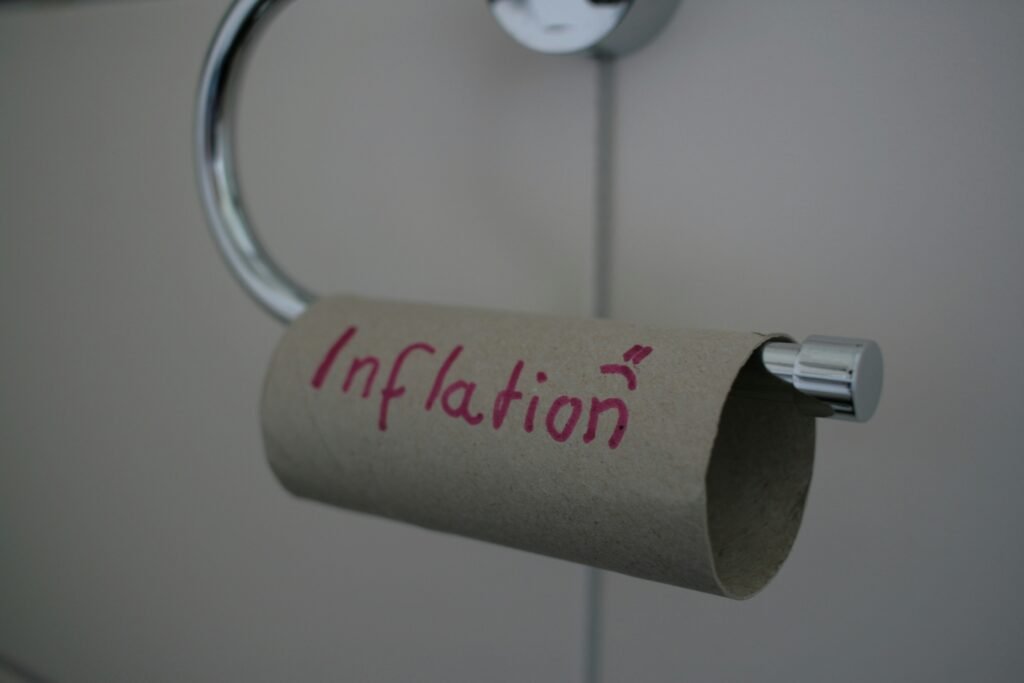
The obvious cost is a savings rate that just never moves, year after year. But that’s honestly the least interesting part. A bigger mortgage, a longer car loan, another few subscriptions these are all fixed costs, and fixed costs eat your flexibility without asking permission first.
Suddenly it’s harder to change jobs, take a real career risk, or absorb a bad month without pulling out a credit card. Retirement contributions tend to stay flat in dollar terms even while income rises, so as a percentage of what you actually make, they’re shrinking, not staying still.
And here’s the part almost nobody talks about: a lot of people feel more anxious about money right after a raise, not less. Their bills grew to match the new number, and there’s no cushion left underneath any of it.
Lifestyle Inflation vs. Healthy Lifestyle Upgrades
Not every extra dollar spent after a raise is some kind of red flag, and I want to be clear about that. Upgrading your life as you earn more is normal. It can even be healthy. The real question isn’t whether you spent more it’s whether you decided to, or whether it just… happened.
| Lifestyle Inflation | Healthy Lifestyle Upgrade |
|---|---|
| Spending rises automatically with income | Spending increases are planned and budgeted |
| Savings rate stays flat or drops | Savings rate holds steady or improves |
| Purchases driven by comparison or novelty | Purchases driven by genuine need or values |
| No emergency fund despite higher income | Emergency fund grows alongside income |
| Debt increases over time | Debt stays manageable or shrinks |
| Little awareness of where money goes | Clear budget and spending plan |
Same apartment, basically, in both columns. Funded by a raise with savings still climbing steadily that’s a healthy upgrade. Funded by a maxed-out credit card with savings that haven’t moved in two years that’s lifestyle inflation, dressed up to look like progress.
How Lifestyle Inflation Affects Long-Term Wealth
The math doesn’t care about intentions. Money that gets saved and invested compounds; money that goes toward a bigger lease payment just… doesn’t. It’s gone, spent, no future version of it waiting around.
Someone who banks even half of every raise instead of spending all of it can end up with a noticeably larger retirement fund and hit financial independence years earlier than someone who earns the exact same lifetime income but absorbs every single raise into their budget.
And here’s the thing this isn’t really about how much a person earns overall. Plenty of high earners retire with almost nothing to show for it.
It comes down to what share of each dollar actually sticks around, instead of quietly funding a nicer-looking version of the same paycheck-to-paycheck cycle.
Practical Ways to Avoid Lifestyle Inflation

None of this requires some extreme frugality lifestyle or giving up things you enjoy. A few habits tend to make the biggest difference.
- Automate the savings increase before you touch the raise. The moment a raise hits, send a fixed percentage half, if you can manage it straight to savings or retirement accounts before it ever lands in checking.
- Sit on big purchases for 30 days. That short a wait is usually enough to separate a real upgrade from an impulse one.
- Track spending by category, not just the grand total. Categories creep up one at a time, quietly, and a monthly glance catches them before they turn into permanent fixtures.
- Set a cap on your “lifestyle budget.” Decide in advance what share of any raise is allowed to go toward upgrades, and hold that line even when something tempting shows up.
- Audit subscriptions every few months. Genuinely the easiest expenses to accumulate, and the easiest to forget you’re even paying for.
- Keep housing and car costs below what you can technically afford. These two categories, more than any others, are where lifestyle inflation actually lives.
- Ask yourself what you actually want, not what looks good from the outside. Financial freedom tends to feel better after a year than any single upgrade does after a month.
Expert Tips to Prevent Lifestyle Inflation
Expert Tips to Prevent Lifestyle Inflation
- Send at least half of every raise straight into savings or investments, automatically.
- Give every new dollar a job before you spend it don’t let it sit around waiting to be tempted.
- Be honest about the difference between “needs creep” and “wants creep.” Most inflation hides in the second one.
- Review recurring charges every few months, not once a year.
- Wait at least 30 days before any big lifestyle purchase.
- Track your savings rate as a percentage of income, not a flat dollar amount, so raises don’t distort how much progress you think you’re making.
- Pick one or two upgrades that genuinely matter to you, and consciously let the rest go.
Smart Money Habits That Increase Happiness

Research on income and happiness keeps circling back to a few spending habits that beat just accumulating more money for its own sake.
Experiences travel, a class you actually wanted to take, dinner with people you like seem to hold up better over time than things do, probably because experiences don’t invite the same relentless comparison and adaptation that dulls the shine of a new gadget within a month.
Spending on other people, even something small, has also been tied to higher reported well-being than spending the same amount on yourself, which is a little counterintuitive if you think about it.
Frequently Asked Questions
What is lifestyle inflation in simple terms?
It’s when your spending rises to match your income, so a raise or bonus gets absorbed into new expenses instead of boosting your savings.
Is lifestyle inflation always bad?
Not necessarily. Upgrading your life as you earn more is normal and can even be healthy, as long as it’s intentional and your savings rate isn’t shrinking while it happens.
How much of a raise should I save?
There’s no single right number, but many financial planners suggest putting away at least 50% of any raise before adjusting your lifestyle around the rest.
Why doesn’t more money make me happier?
Research shows income does improve happiness, especially at lower and middle income levels, but the effect can plateau for some people, and hedonic adaptation means the emotional lift from any one purchase fades faster than you’d expect.
What’s the difference between lifestyle inflation and lifestyle creep?
Not much they’re basically the same idea. Both describe spending that climbs alongside income, usually without a conscious decision behind it.
Can lifestyle inflation happen at any income level?
Yes. It happens to minimum-wage earners and millionaires alike, because it’s driven by the gap between spending and income, not the size of either number.
How do I know if I’m experiencing lifestyle inflation?
Compare your savings rate now to what it was before your last raise or two. If it hasn’t improved, some or all of that extra income has probably gone toward lifestyle inflation without you clocking it.
Conclusion
Lifestyle inflation isn’t a character flaw. It’s closer to a default setting one nobody actually chose, it just came pre-installed. Every raise, bonus, or windfall lands at a small fork in the road: fund the future, or fund the upgrade. Neither answer is wrong by itself.
But pick the upgrade often enough and financial freedom keeps sliding a little further out of reach, one reasonable purchase at a time.
The research on money and happiness backs this up pretty clearly income matters, sure, but how deliberately you use it seems to matter just as much, maybe more.Catch the pattern early. Redirect even part of the next raise before it finds something to spend itself on.
Do that enough times and a bigger paycheck might actually start to feel like one, instead of just… more numbers passing through on their way somewhere else.
Leave a Reply