Introduction
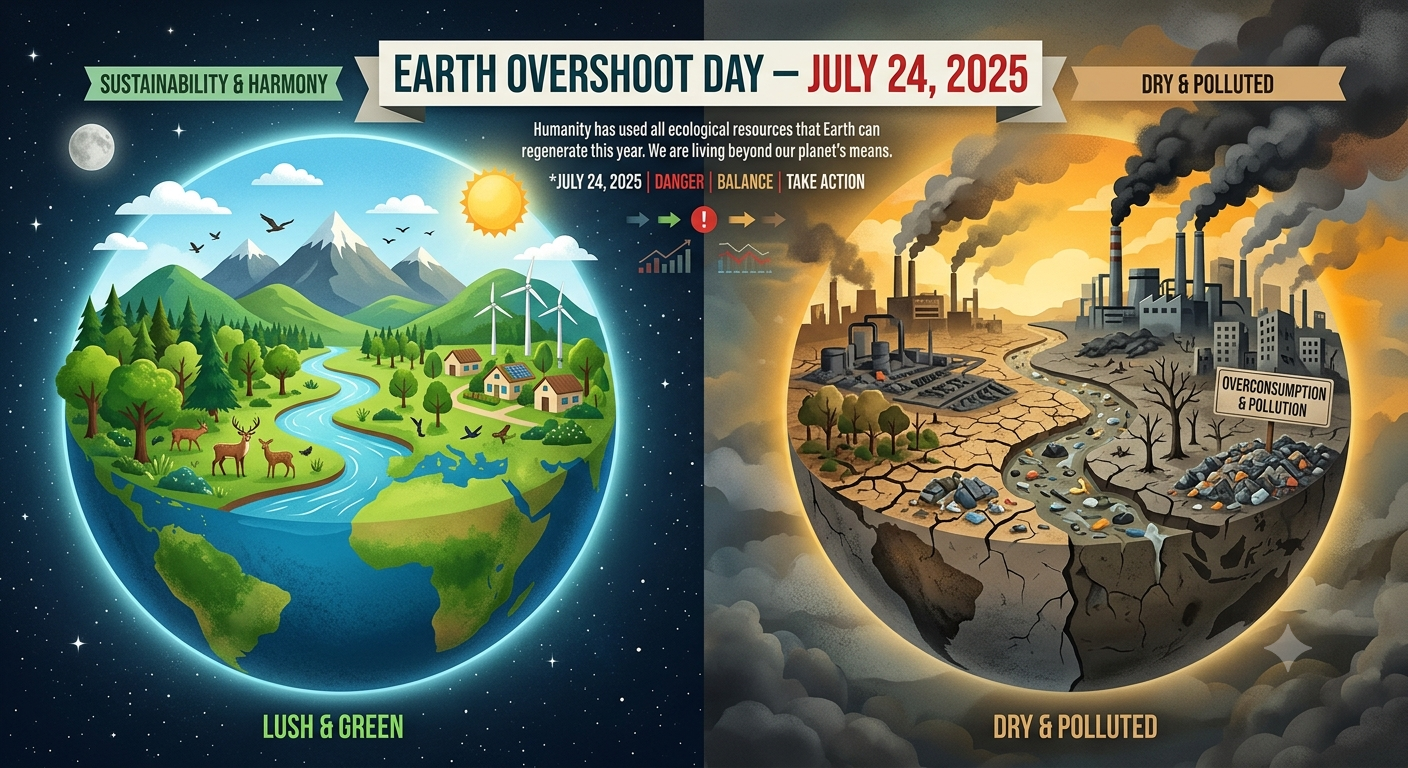
July 24, 2025, circle it; that’s the day we ran out. Earth Overshoot Day marks the point where humanity has used up everything the planet can regrow in a full year. Every day after it, we’re spending savings we don’t have. I think of it as living paycheck to paycheck; spending it three weeks early and still owing the rest of the rent.
It’s really quite simple, when you think about it. That’s what we are doing when it comes to our natural resources. We are spending it before we even made it. Water tables are sinking, forests are thinning out fast.
Wildlife numbers have dropped by nearly three-quarters since 1970. Not a fun sentence to write. But stick with me, because the second half of this story is about what’s still in our control.
What Does Protecting Natural Resources Actually Mean?
Here’s how I think about it, imagine two bank accounts sitting side by side. One tops itself back up, forests, fish stocks, fresh water, as long as you don’t drain it faster than it fills. The other one? No refills, ever. Oil, coal, metal ores. You spend it once, and it’s gone for good.
So protecting natural resources really just means treating both accounts with some common sense. Pull out only what nature can put back. And when that’s not on the table, go find a substitute before the balance hits zero.
Simple to say, genuinely hard to do, because it means rethinking. How we farm, how we build, how we manufacture, even how we shop on a Tuesday afternoon.
Why This Matters Right Now
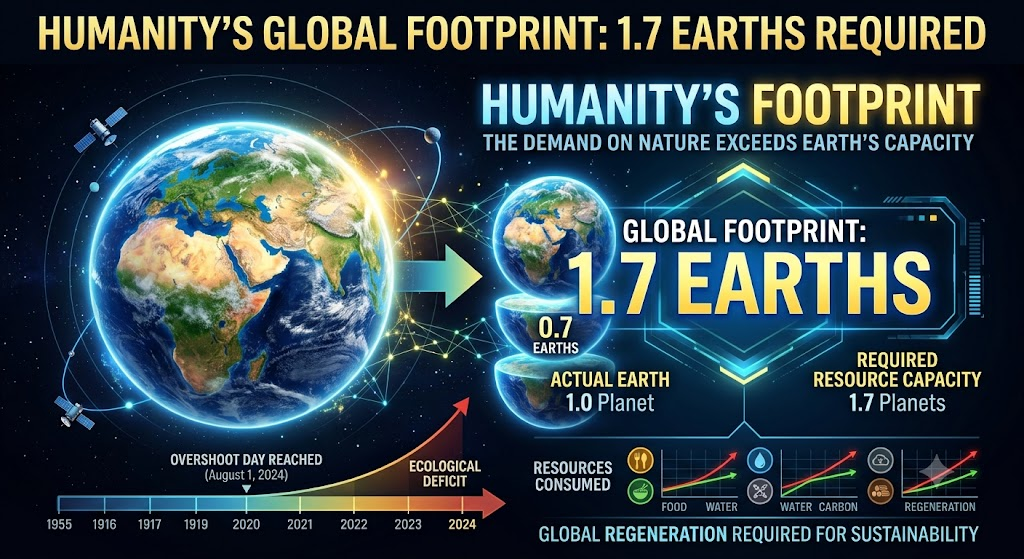
Because the math isn’t theoretical anymore. In 2024, humanity used the equivalent of 1.7 planets to cover its needs. We have exactly one, nobody’s got a spare Earth tucked away in a warehouse somewhere. Water may be as powerful as any other thing.
The World Health Organization (WHO) estimates that almost two billion people presently reside in water-stressed regions. For the families who live in these areas, this has disastrous effects. A drop in their standard of living as they cannot plan meals around the assumption that water will be there when they need it.
How Water and Wildlife Loss Affect Our Daily Lives
Agriculture uses up nearly 70% of freshwater withdrawals worldwide. Simply to keep grocery stores stocked with the produce, grains, and vegetables we consume at every meal. So when fresh water becomes difficult to find, both farms and families are negatively impacted.
Wildlife is telling the same story, just louder. WWF’s 2024 Living Planet Report found an average 73% drop in wildlife populations since 1970. Freshwater species got hit the worst, down 85%. Land species fell 69%. Marine life dropped 56%.
Read those numbers twice, they don’t get less alarming the second time. This isn’t a story that stays inside an environmental newsletter. It shows up in grocery bills, in public health outcomes, in whether local economies hold steady or start to wobble.
What the Research Shows
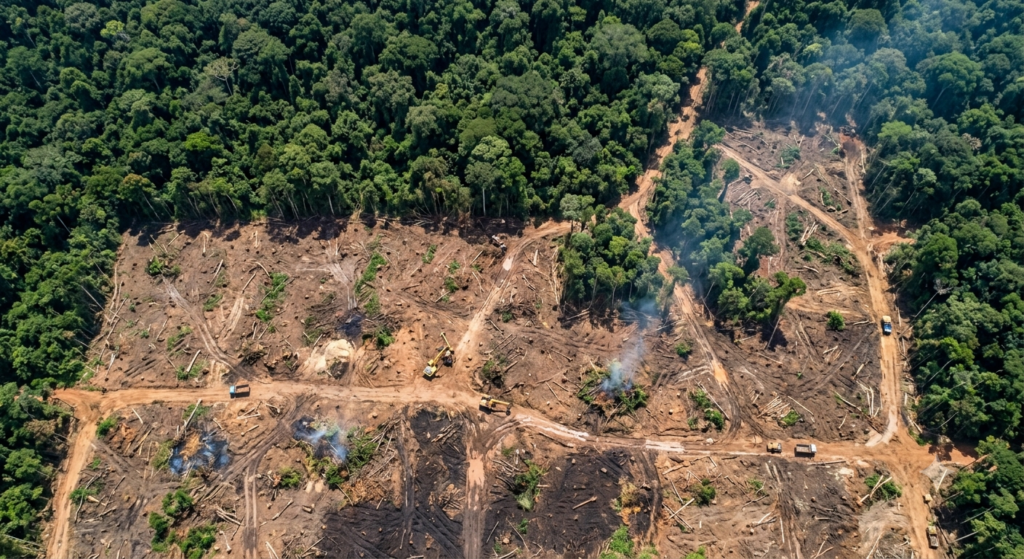
Extraction rates have been climbing for decades, and not gently either. Global mineral extraction rose about 45% between 1980 and 2005. Metal ore extraction alone jumped more than 65% in that same window. Nothing about that trend has reversed since. Forests are losing ground even in places where governments promised otherwise, on paper at least.
Over 100 countries pledged to end deforestation by 2030. And yet 37,000 square kilometers of prime forest disappeared in 2024 alone, up 3.2% from the year before that. Roughly the size of the Netherlands, gone in twelve months.
Rising Energy Demand and the Choices We Make
Energy demand isn’t slowing down either. The International Energy Agency expects global energy demand to climb 25% by 2040. Every bit of that growth leans harder on resources we can’t just reprint when we run low.
None of this was fate, it’s the sum of specific decisions made in fields, in factories, in government offices. Which also means different decisions, made consistently enough, can bend that line the other way.
The Real Obstacles
A few things make this messier than any slogan lets on.
Rising demand is the obvious one. More people, and more people consuming at higher levels, means more pressure on a base that isn’t getting any bigger. Then there’s short-term math. Fast extraction almost always beats careful extraction on this quarter’s spreadsheet, even when it loses badly on next decade’s.
The Unequal Impact of Conservation Failures
Promises without teeth don’t help either. Plenty of conservation pledges carry zero penalty for missing the target, and good intentions rarely survive a tight budget meeting unchallenged, and the pain isn’t spread evenly. Latin America and the Caribbean saw wildlife declines of 95%.
Europe and Central Asia saw 35%. Same planet, wildly different damage, and wildly different resources to fix it. None of that gets solved by a mission statement on a company website. It takes real structural change in how resources get priced, used, and replaced.
What’s Actually Working
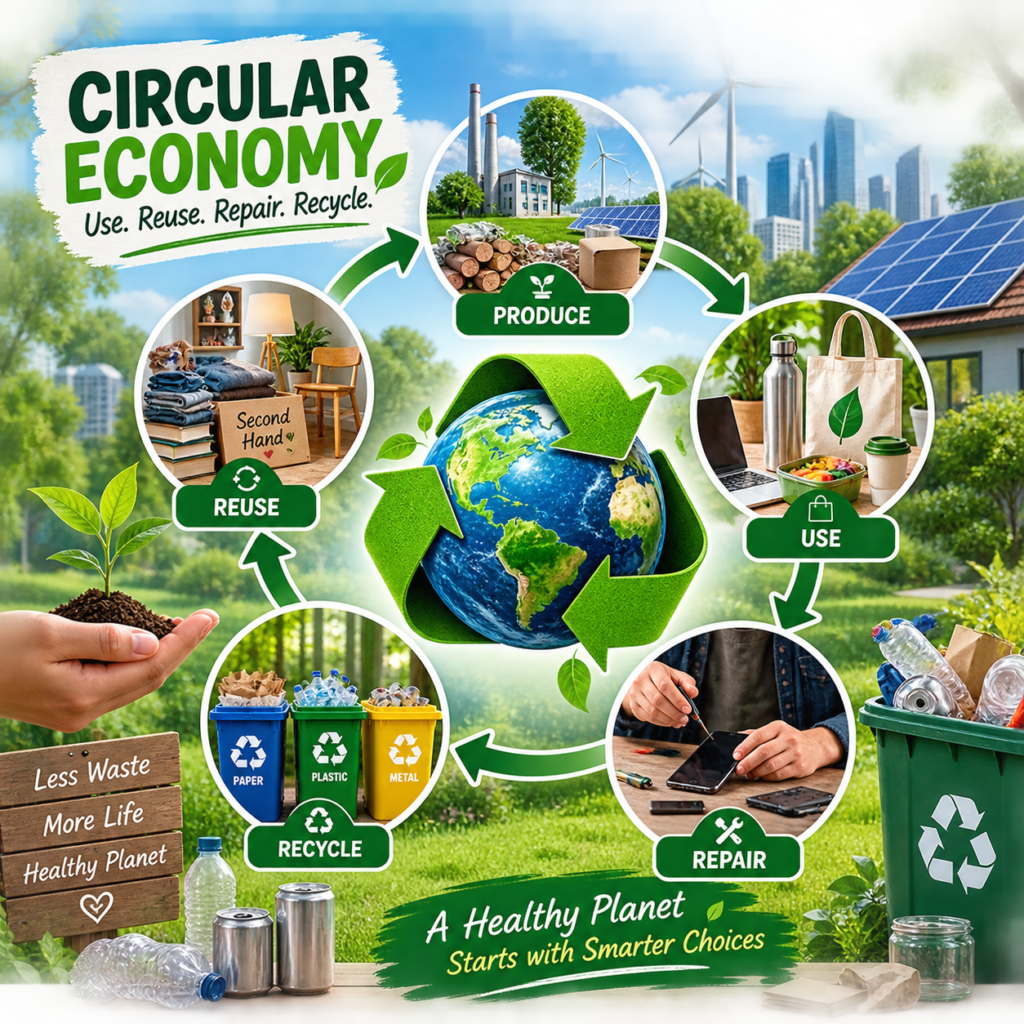
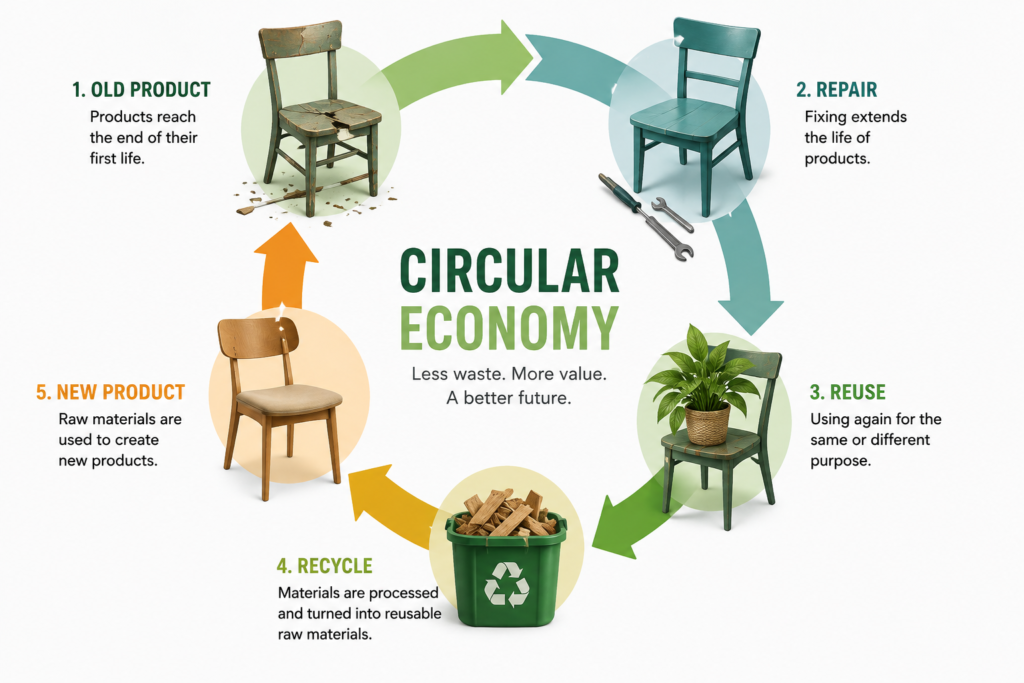
A handful of approaches are showing up in real numbers now, not just glossy annual reports. Circular economy models are one, skip the take-make-toss cycle entirely. Design products to be reused, repaired, or recycled from day one, and suddenly less needs to come out of the ground to begin with.
Renewable energy is another, maybe the most obvious one. Every unit of solar or wind power is a unit that didn’t drain a shrinking fossil fuel reserve, and lower emissions come along for the ride. That’s a rare two-for-one in this space.
Regenerative Agriculture and the Economics of Conservation
Regenerative agriculture deserves a mention too. Farming built around soil health and lighter water use is already cutting the pressure agriculture puts on freshwater. Which matters a lot given how much of that water farming already claims. Then there’s the money side.
The WWF’s Global Futures report puts the cost of failing to halt nature loss at nearly £10 trillion by 2050. That number is starting to change actual boardroom conversations. Conservation is looking less like charity now, and more like risk management, and risk management tends to get attention a lot faster than charity does.
Misconceptions Worth Dropping
A few myths do more damage than most people realize, conservation is the government’s job. Except businesses and individuals shape demand every single day, and demand is what drives extraction in the first place. Recycling solves it. It helps, genuinely; no argument there.
But it barely touches the demand for new raw materials. Reducing and reusing carry just as much weight, arguably more. Technology will handle it eventually, new tech helps, sure, but only when it’s paired with policy and actual behavior change.
Efficiency gains often get swallowed whole by higher consumption, something researchers call the rebound effect. Build a more fuel-efficient car, and people just end up driving it farther. Clearing these up matters more than it sounds, because they quietly decide where people put their energy and attention.
Where the Research Points Next
WWF doesn’t hedge on the timeline. The next five years matter more than the ones after, because the solutions already exist across conservation, food, energy, and finance. What’s actually missing isn’t knowledge; it’s speed. Researchers studying resource depletion keep circling back to the same pattern, over and over.
Countries and companies that price resource use honestly, environmental cost included, conserve more effectively than the ones relying on voluntary promises alone. Numbers move behavior in a way that pledges just don’t. And here’s the part worth holding onto: it’s not all bad news.
Some wildlife populations have stabilized, even rebounded, in places where conservation efforts and species reintroductions actually took hold. Progress is real. It’s just not automatic, and it never happens by accident.
Research Spotlight
Earth Overshoot Day
July 24, 2025, circle it; that’s the day we ran out. Earth Overshoot Day represents when the world’s population has consumed all the food the world can grow in one complete year, and each day following is a day of taking money that we aren’t saving.
Wildlife Decline — WWF
According to WWF’s latest Living Planet Report, wildlife populations have declined by an average of 73% since 1970. Freshwater ended up hardest hit at 85%. Land species fell 69%. Marine life dropped 56%. Repeat the numbers twice, the second time it isn’t as alarming.
Conclusion
Protecting natural resources for future generations was never really about having the right tools. Honestly, we’ve had them for a while now. The real question is whether we move fast enough to actually use them. The numbers show a planet under genuine strain, no way around that.
But they also show that focused action, in farming, energy, business, and policy, changes what happens next. This isn’t growth versus conservation, whatever the headlines make it sound like. It’s spending down what’s left versus building something that actually lasts.
Either way, the next generation inherits whatever we decide today. Renewable energy may be generated from diverse sources, apart from fossil fuels. Furthermore, renewable energy sources may be used to decarbonize the economy, if they are harnessed correctly.
Frequently Asked Question
Earth Overshoot Day: What exactly is it?
Every year on this day, we have finished everything nature could regrow in twelve months. That day in 2025 fell on July 24. Everything that follows comes from savings the Earth doesn’t truly possess.
Since 1970, how much has wildlife decreased?
According to the Living Planet Report from WWF, wildlife numbers have fallen by an average of 73%. Freshwater species suffered most down 85%. Land species decreased 69%; marine life declined 56%.
“Protecting natural resources” really means what?
Consider two bank accounts, as long as you don’t use it faster than it replenishes, one refills itself like forests, fish, and clean water. The other never refills; consider oil, coal, and metal ores.
Why is water scarcity such a serious problem
According to the World Health Organization, around two billion people already live in water-stressed areas. Then consider the fact that agriculture consumes around 70% of the world’s freshwater only to keep food on the table.
Leave a Reply