Introduction
Smartphones play a crucial role in people’s lives. The problem of excessive smartphone use and its negative effects is gaining significance. These devices have significant advantages with regard to communication, productivity and information.
But overindulgence can have a detrimental impact on both physical and mental health. Although these devices offer great benefits in communication, productivity and access to information. Too much screen time can have serious implications for physical and mental health.
Studies are ongoing that associate excessive smartphone usage with other negative effects. For instance sleep disturbances, poor focus, heightened stress and strain on the eyes, and strained social interactions.
The first step towards healthier digital habits and a balanced lifestyle is to understand the risks of excessive smartphone use. This article will delve into the main risks associated with excessive smartphone usage.
The indicators to keep an eye out for, and strategies to cut back on screen time without missing out on tech advantages.
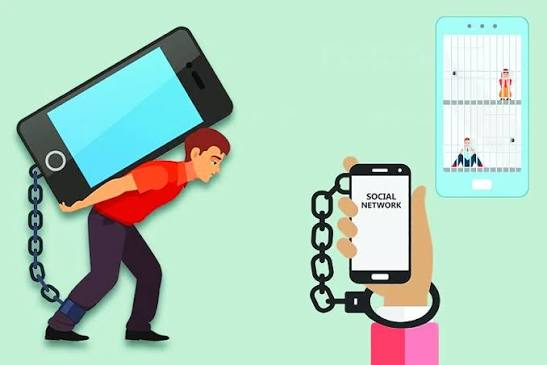
Signs of Excessive Smartphone Addiction
The thing is, there isn’t any arbitrary number of hours to determine whether it is “normal” or “excessive.” Working remotely and using a phone all day for client calls doesn’t mean someone is addicted to their phone.
A person who only checks his cell phone for two hours. But can’t stay at a meal without checking his cell phone may be.
Learning about the dangers of excessive smartphone use and the harms. It can enable you to identify unhealthy habits that are going on during use before they impact your daily life.
The important thing is felt as a compulsion, not a choice. There are a couple of indicators to look out for:
- You pick up your cell phone first thing every morning before you are fully awake.
- You experience a slight worry when the battery level gets below 20%.
- You begin an application which you feel you need to use for a minute and you end up using for hours.
- You’re always losing your sleep because of late night scrolling.
If you can relate to a couple of these. You may be experiencing some form of “problematic smartphone use,” aka “phone addiction.”
What Is Excessive Smartphone Use?
Well, it’s a good suggestion to make it from facts rather than emotions. A look at the recent industry and survey based research (2025-2026) yields a fairly consistent picture:
- The worldwide average is now 3.5-5 hours a day of screen exposure. Some countries in Asia and North America having higher rates.
- Almost 90% report checking their cell phone within 10 minutes of waking up – sometimes even before their coffee arrives.
- As a matter of fact, almost half of the international population use smartphones.They say that they use their phone more than they want to. According to their own words.
- About 20% battery life causes such a sense of anxiety or panic. Researchers have recently created a new term: “nomophobia” (no-mobile-phone phobia).
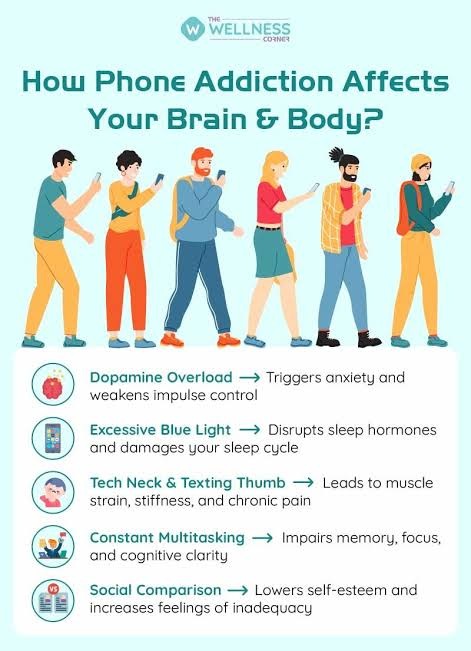
- The heavier users report more eye strain, neck and posture pain (also called “tech neck”).Sleep issues and self-reported anxiety compared to lighter users.
These are just suggestions from different research firms, so they are not “the truth. The trend, however, is clear-cut—screen time is only increasing from year to year. More people are recognizing their phone relationship isn’t healthy.
Understanding Excessive Smartphone Use and Its Harms is the first step toward building healthier digital habits.
The Real Dangers of Excessive Smartphone Use
The effects on your body when you use it.The impact it will have on your body when you use it.
It’s a slight understatement – the damage builds up over time. Ever had a sore bottom of the neck after spending too much time on the phone? Ever experienced a sore bottom of the neck after too much phone time? It’s not in their heads.
The strain on your neck is increased when you look down at your phone. The further your head is down the more the strain is. This condition is now referred to as “tech neck” by a lot of doctors.
The damage can be cumulative, if this posture is maintained for several hours each day.
It may also result in a chronic neck pain and permanent posture issues.Then the eyes.Then the eyes. You start looking at a bright screen for hours, and you wind up with dryness, blurriness and headaches.
It wasn’t even a topic of conversation twenty years ago. Digital eye strain is one of the most common vision complaints physicians are seeing. Sleep this one is big. Blue light from screens can interfere with your sleep by affecting the sleep hormone melatonin.
Many teens will admit that they are constantly sle eping through the night due to their cell phones.In all honesty, most adults will admit the same truth if asked to do so.
The Impact on Mental Well-Being
This is likely the most talked about aspect of this right now and it’s for good reason.
Your brain never turns off and is always on the look out for the next pop up. That will have lasting effects of chronic stress.
The catch is that the very apps that are meant to “connect” people. They used to excuse their heightened loneliness. Going through everyone else’s highlight reel, what they’ve accomplished. How pretty they are, the pictures they’ve taken, subtly drives in comparison and, for many, a sense of failure.
Changes in Family and Social Connections
One would expect a device for communicating to be used for bringing people together. In most instances it does the exact opposite.
Excessive Smartphone Use and Its Harms can weaken relationships by reducing face-to-face communication and emotional connection.
There’s a new term for this this and it’s strange — “phubbing,” which translates to “phone snubbing.” It has become commonplace to the point that many couples and families have noted.They experience some real conflict about it. Particularly around the dinner table and during family time.
One thing people fail to do is to have a genuine conversation.Due to the need for quick response and sending text messages. You can text someone, chat with them all day long and leave them feeling like they barely connected to you.
Effects on Productivity, Learning, and Career Growth
This has an impact on your work and studies.Here are its effects on your work and studies.
It’s undeniable that phones are a major distraction in the classroom, in the office, and they are taking over.
In fact, it’s supported by academic studies. Students that check their phones regularly throughout study time learn less and perform worse on exams. As compared to students who don’t check their phones throughout study time.
It’s just the same at work. In fact, a high percentage of workers report that alerts break up their work several times a day. It may not seem that much of an inconvenience one at a time. But it can be a lot of an inconvenience over the course of a day.
Among the many Excessive Smartphone Use and Its Harms, lower productivity and reduced academic performance are common problems.
Another phenomenon that can also arise, is that of ‘digital amnesia’. This is when the multitaskers are very busy and they seem to forget. What they are doing as they are constantly distracted by the phone.
Everyday Risks You Might Overlook
This is not a mental health issue, but rather a real physical life threatening one. Even though we have introduced technology to warn drivers when they are taking phone calls while driving. This is still one of the leading causes of traffic accidents.
As there are only a few seconds to go wrong. Looking at a screen while walking also increases the danger. For example falling, crashing or being out of the way and suddenly entering traffic.
Practical Ways to Manage Excessive Smartphone Use
The good thing is that none of these is “permanent”. Habits can be changed over the course of years. But if you’re willing to make the effort, it can be done.
Be aware of how many hours you are on your screen. This is being monitored by most mobiles already. The first thing to do is to see the true number, before changing anything. It will surprise you and come back to you.
Reducing Excessive Smartphone Use and Its Harms starts with setting screen-time limits and taking regular breaks from your device.
Reduce notifications that aren’t necessary. Fewer interruptions means you don’t need to pick up the phone that much.
Make sure that spaces are free of telephones. The dinner table and the bedroom are good places to start.
Try using the grayscale function. On the surface, the issue might appear minor. However, when it comes to color removal, apps will feel obvious lacking in their capability to continue scrolling.
Have designated periods to see messages and social media rather than every minute, day, or hour.
Keep your phone out of the bedroom, where it is already at night. This is the one habit that will help to curb late night scrolling more than anything else.
Replace the reflex. If you feel like you need to reach for your cell phone because you are bored. Take a short walk, stretch or pick up a book.
Have one day a week without electricity on the phone. This is not the digital detox thing, but it is a day where you’re a little more aware of what you are doing.
This is a premise to remember throughout all this. Technology is supposed to be your weapon and not your companion who is controlling your day. So, the majority of the digital wellness tips and strategies revolve around. That one thing: using the phone with purpose, not on “autopilot.”
Real life example
A Real Case of Smartphone Addiction
A clinical case published in the National Center for Biotechnology Information (NCBI) described an 18-year-old woman whose smartphone use reached nearly 8 hours every day.
She constantly checked social media, felt anxious when separated from her phone, neglected daily responsibilities, and struggled to control her screen time despite knowing it was harming her life.
Smartphone Overuse and Mental Health
A 2023 case study published in Acta Neuropsychologica examined a 32-year-old woman who spent approximately 9 hours per day on her smartphone using social media, messaging apps, YouTube, and web browsing.
Over time, she experienced reduced productivity, difficulty concentrating, disrupted daily routines, and symptoms associated with problematic smartphone use.
Conclusion
It’s not a “smartphone vs. smartphone” battle. They’re very handy, not possible and it’s not even necessary that they pretend. Yes, it’s the device, but more it’s the incremental behavior that occurs around it. Compulsive checking, late night scrolling, notifications that don’t help the brain to relax.
Knowing about Excessive Smartphone Use and Its Harms can help you make better choices. It may promote health, relationships and overall quality of life.
The initial step is simply seeing it. If you can accept you are doing it, then you are on the right track to changing it. Such things as turning all unnecessary notifications off or not putting the phone in the bedroom. Make a difference that is not obvious.
This wasn’t to be thrown away. It’s to ensure that you want to pick up, not the other way round.
There is no fixed time frame for this rule. Most scientists probably would not care as much about how many hours someone spends doing a task.
This is about 2 hours per day, but can differ depending on your career, age and living style.
Research has revealed that smartphone and social media overuse are linked to greater self-reported anxiety and depressive symptoms.
The nervousness or worry that you may not have your phone. If the battery is flat or if you don’t have service, or simply if you left it at home.
Leave a Reply